
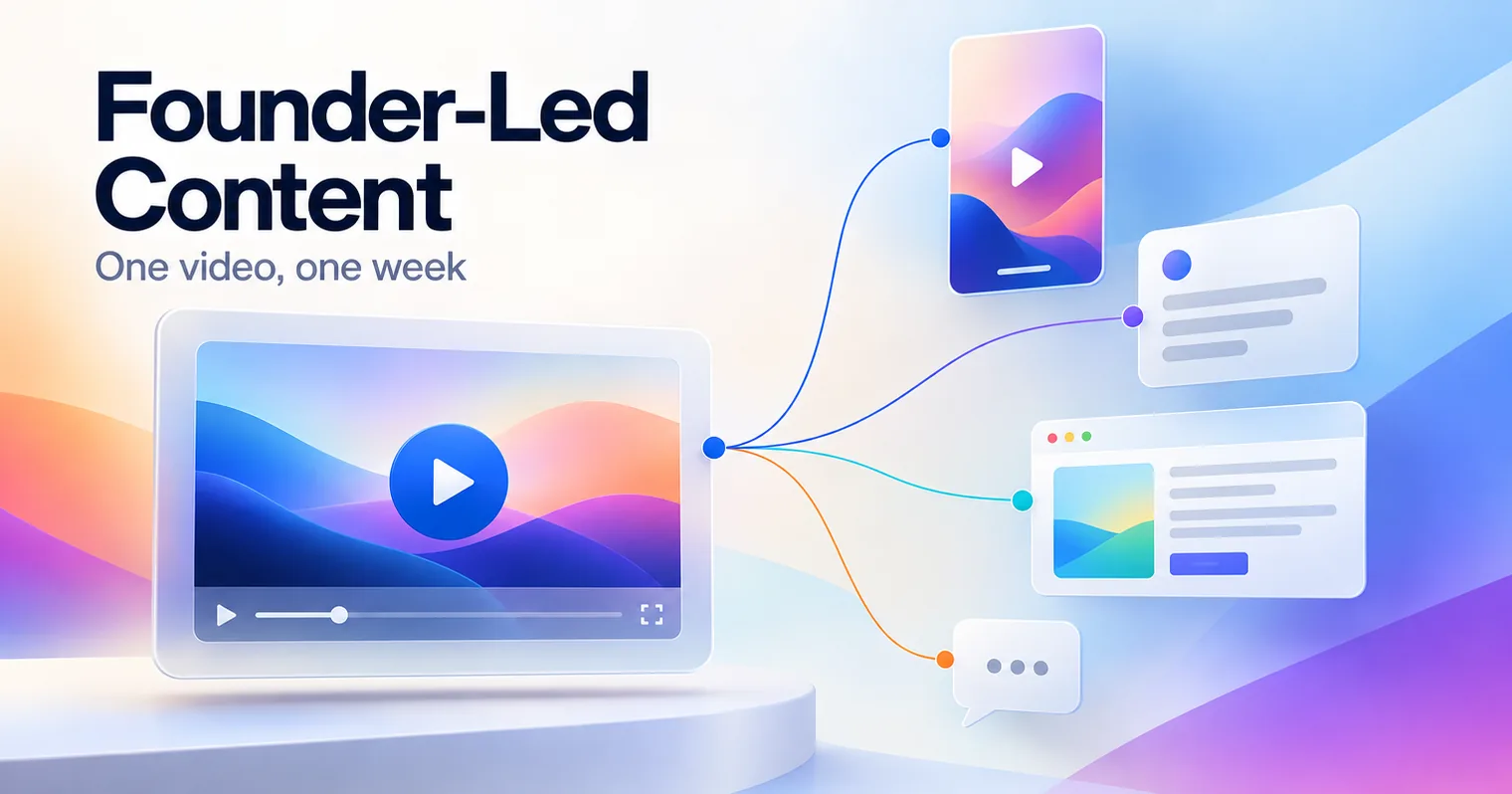
Founder-led content is marketing where the founder is the voice, sharing what they see in customers, the market and their own product. A solo founder can run it in about 4 hours a week. Pick one useful topic, record one short video that shows it, cut it into shorts and a LinkedIn post, and publish. Then read the replies, DMs and sales-call mentions to choose next week's topic.
What is founder-led content, and why does video matter now?
B2B buyers now expect to see the people behind a product, and video is how they see them. Yet the most-read founder advice still tells a busy founder to skip video. Founder-led content is content published under the founder's own name and face, built from what only the founder sees. That means customer calls, product decisions, market shifts and honest opinions.
Founder-led content is not a company blog with a founder byline. Buyers follow people more readily than logos, so the founder's account becomes the brand's most trusted channel. Video now carries most of that trust in B2B.
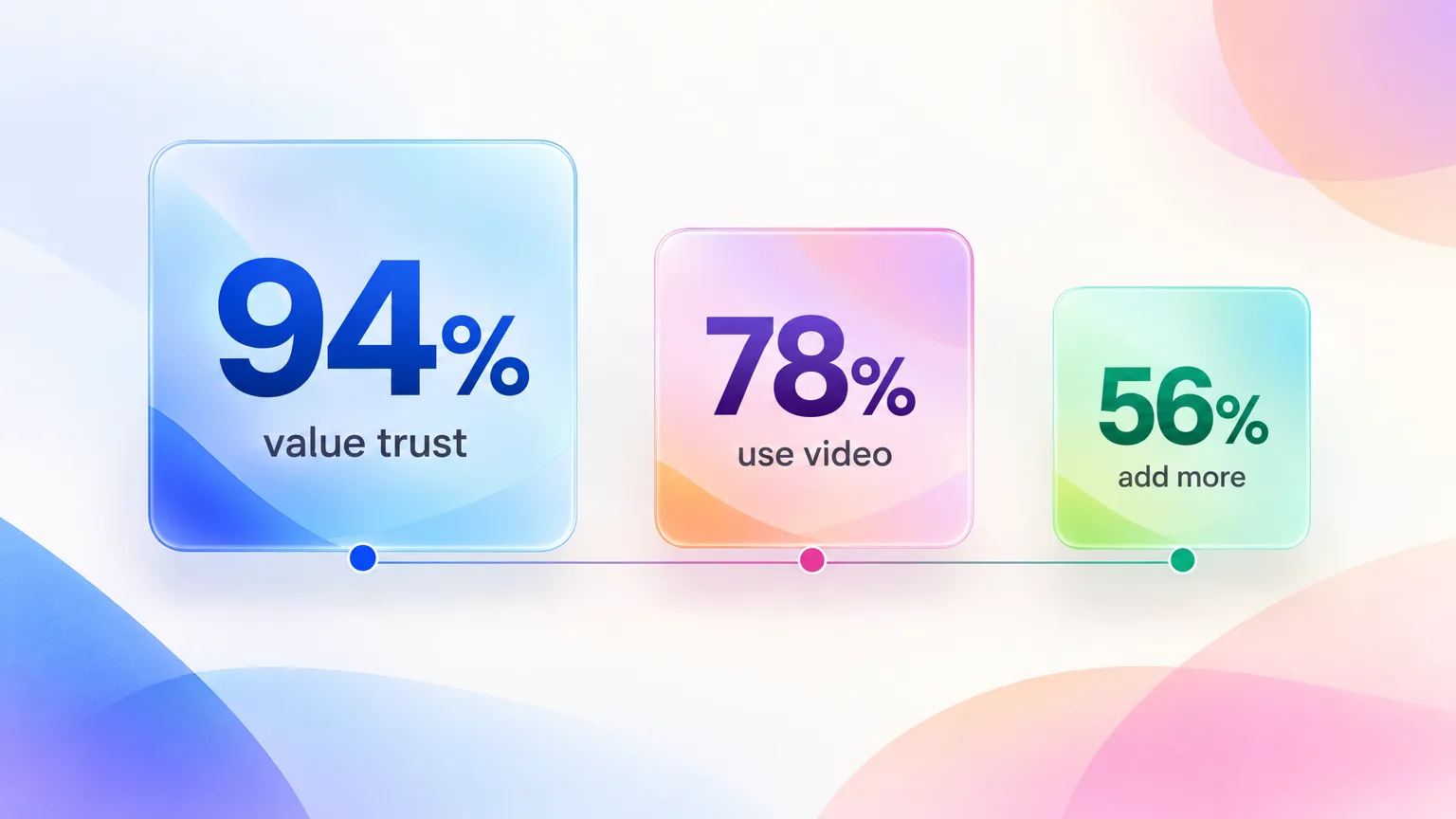
The numbers back the shift. LinkedIn and Ipsos surveyed B2B marketers for their 2025 B2B Marketing Benchmark. They found that 78% already use video and 56% plan to use more of it next year (PPC Land summary of the LinkedIn and Ipsos benchmark). The same survey of 1,500 marketers in six countries found that 94% call trust the most important factor in B2B brand success. Short-form social video was the format marketers rated highest for return.
Trust is the part a founder can supply that a brand account cannot. A founder who explains one real customer problem on camera gives the buyer three things at once. The buyer sees a face, hears a point of view and watches the product do the work.
Founder-led content, founder-led marketing and founder-led sales
These three terms overlap, and searchers mix them up. The table shows where each one starts and stops.
| Term | What the founder does | Main output | Typical goal |
|---|---|---|---|
| Founder-led content | Publishes their own ideas, lessons and opinions | Posts, short videos, newsletters | Trust and inbound conversations |
| Founder-led marketing | Owns the whole marketing motion, often with a small team | Positioning, launches, campaigns | Pipeline and brand |
| Founder-led sales | Runs discovery and closes the first deals personally | Calls, demos, follow-ups | Revenue and product learning |
For a solo founder, all three run on the same raw material. The question a prospect asks on a sales call is next week's video. The video then warms up the next sales call.
Why should a solo founder start with video instead of text?
A solo founder should start with video because video shows the difference instead of describing it. A written post can claim that one tool is faster. A 60-second clip can put both tools on screen and prove it. That proof is what earns trust from a skeptical B2B buyer. One recorded video also produces more reusable material than one written post, which matters most when there is no team.
Most founder-led content advice says the opposite. HubSpot's current playbook for founders sets a 90-minute weekly writing routine on LinkedIn. It lists recording videos as advice a busy founder can skip (HubSpot's founder-led content strategy). That works for a founder whose edge is writing. It undersells video for a founder whose edge is the product itself.
Video is the wrong default in two cases. The first is a product with little to show on screen, such as an API or a data pipeline. There, a written teardown or a diagram often explains more than a screen recording. The second is a founder who writes far better than they speak. That founder should start with text and add video once the topics are proven.
What this looks like for one SaaS founder
The GuideClarity team, the people behind this blog, builds most of its own founder-led content as video. The work covers software comparison videos, Shorts, product explainers and short AI news clips. One recent example is a comparison of Guidde and Trupeer. The team made a longer version and a short-form cut of the same topic, then published the matching Guidde vs Trupeer comparison page.
The goal was not to list features. It was to say quickly who each product suits. Guidde fits teams that want fast step-by-step guides and integrations. Trupeer fits teams that want more polished product and tutorial videos.
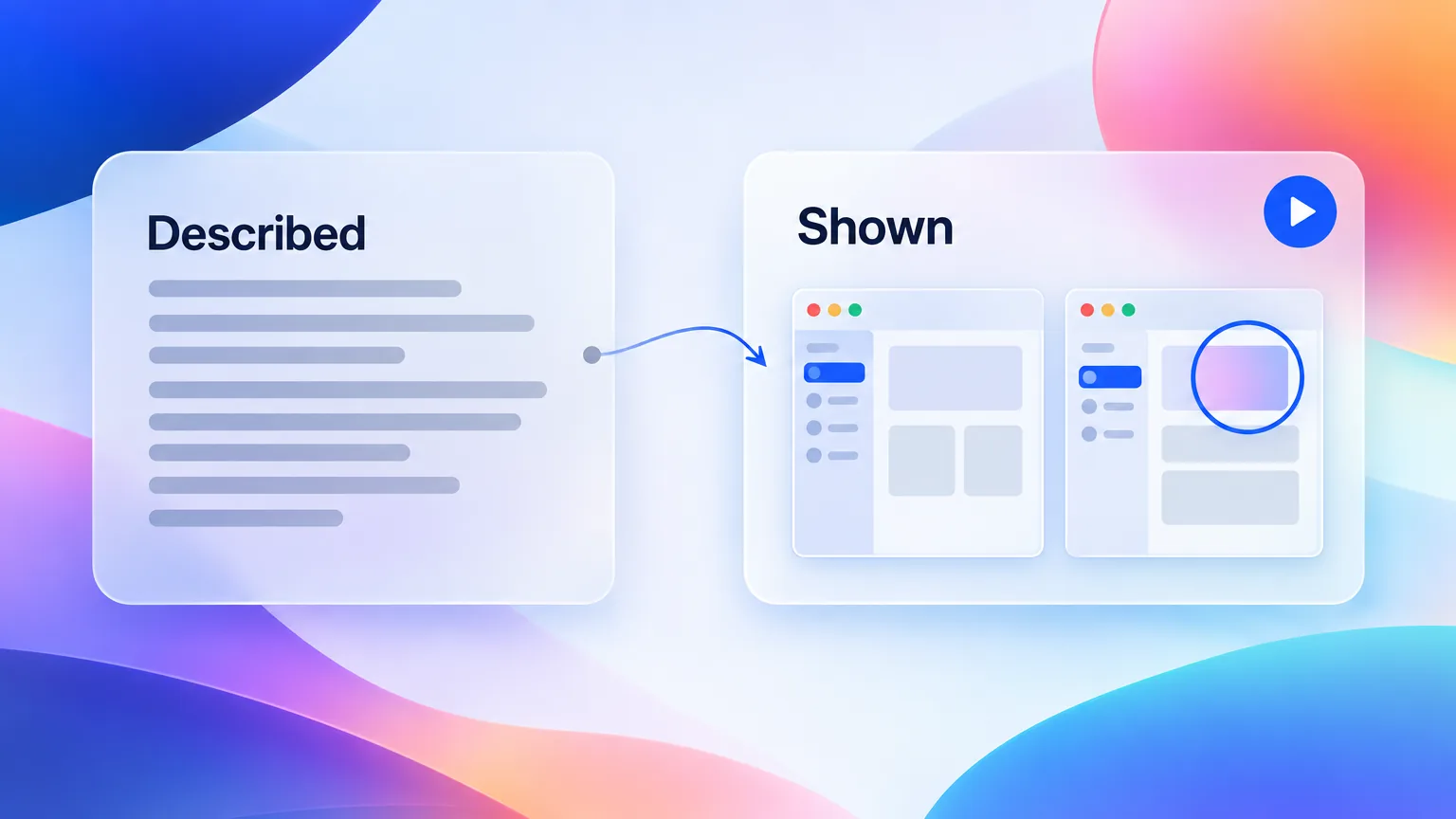
In the team's words, video makes it possible to "show the difference instead of just describing it." The products, the interface, the pricing and the final output all sit in front of the viewer. That makes the opinion easier to check, and easier to believe.
The company has not published view or lead numbers for these videos yet, and this post does not quote any. The point here is the method, not a growth claim.
What should your first founder video be about?
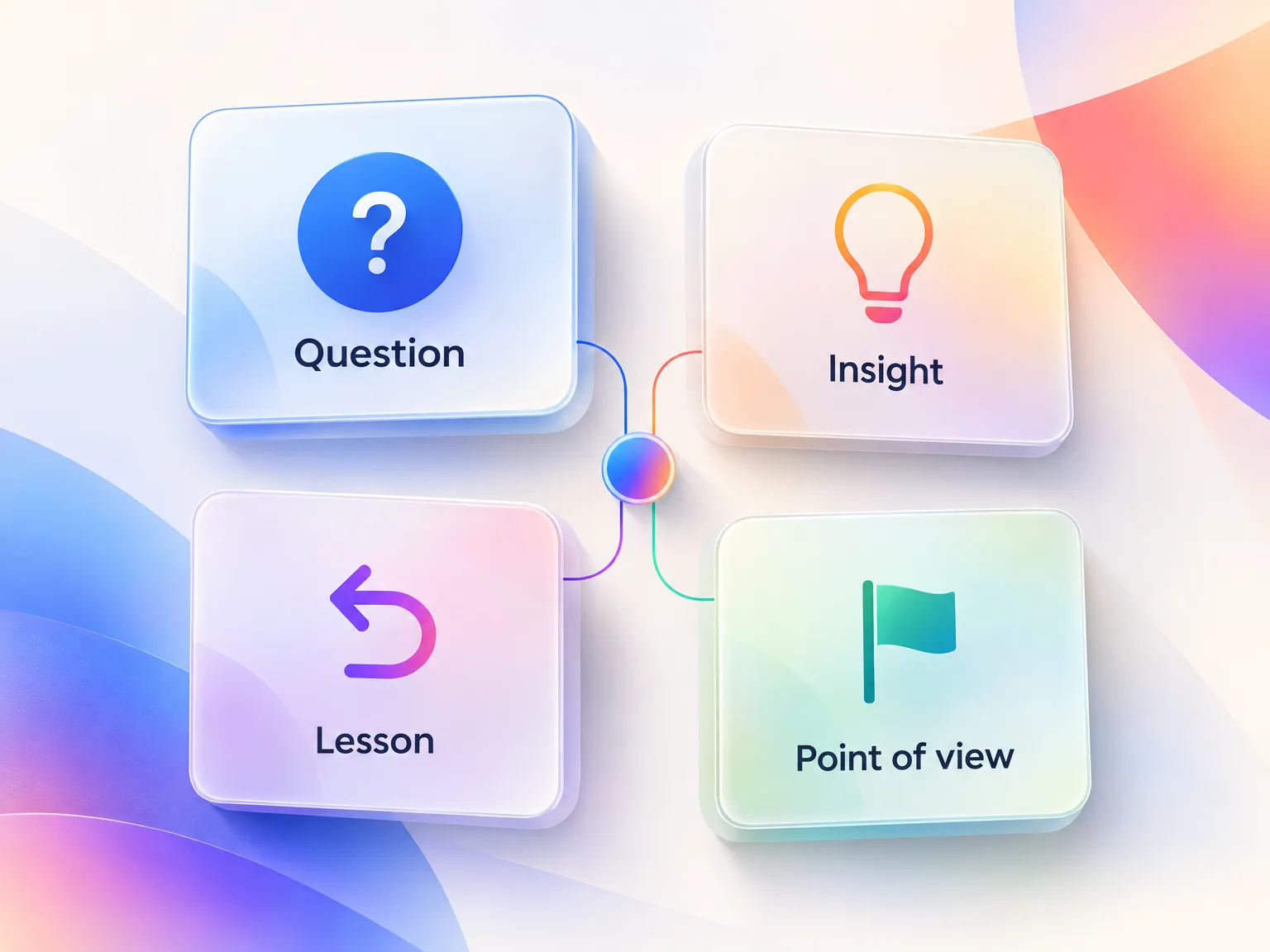
Your first founder video should answer one thing a real buyer asked you this month. A solo founder does not need a content strategy deck to begin. Each video needs one of four starting points. That can be one customer question, one useful insight, one lesson learned, or one strong point of view. Pick the one you can explain in under two minutes without notes.
The four starting points map to four reliable formats. Each one works because it comes from something only the founder knows.
| Starting point | Prompt to ask yourself | Format that fits | Example opening line |
|---|---|---|---|
| One customer question | What did a prospect ask on a call this week? | Screen recording with voiceover | "A buyer asked me how we handle X. Here is the answer on screen." |
| One useful insight | What do I know that the market gets wrong? | Talking head, then product footage | "Most teams measure X. The number that matters is Y." |
| One lesson learned | What did we change after it failed? | Before and after on screen | "We shipped X. Customers ignored it. This is what we changed." |
| One strong point of view | Where do I disagree with the usual advice? | Talking head, 45 to 90 seconds | "I used to believe X. After shipping Y, I stopped." |
Pick one starting point as your default and stay with it for a month. A founder who rotates between all four every week makes it harder for the audience to know what to expect. Customer questions are the easiest default, because the supply never runs out and every answer doubles as sales material.
Steli Efti, co-founder of Close, describes a similar habit in the Close founder-led content guide. The guide recommends recording short voice memos around customer conversations and turning them into content later (Steli Efti on founder-led content at Close). The raw material is the conversation, not a blank page.
How do you hook viewers in the first 10 seconds?
You hook viewers by opening with the useful difference, not with an introduction. A B2B viewer decides in the first few seconds whether the video will help them. A greeting, a logo sting or a list of features loses them. State the answer or the tension first, show it on screen, and explain afterwards. The rest of the video earns time only after the opening has earned attention.
This is the main lesson from the Guidde and Trupeer comparison videos. The early cuts had long introductions and generic feature lists. The videos now open with a stronger hook and real product footage. They compare the tools directly and end on a clear verdict about which tool fits whom.
Here is how that change looks on a comparison video. The example below is illustrative, written for this post rather than taken from a real script.
| Second | Slow opening | Fast opening |
|---|---|---|
| 0 to 5 | "Hi everyone, welcome back to the channel." | "Tool A is better for guides. Tool B is better for polished videos." |
| 5 to 15 | "Today we are looking at two popular tools." | Both products on screen, the same task in each. |
| 15 to 30 | A list of features for tool A. | The moment the difference shows, such as the finished output side by side. |
Four hook patterns work for founder video because each one promises a specific payoff:
- The reframe. "I used to believe X. Then we shipped Y." The viewer stays to see what changed.
- The number. "We tried to move one metric. Here is what happened." The viewer stays for the result.
- The mistake. "This was obvious in hindsight, and we still got it wrong." The viewer stays to avoid the same mistake.
- The verdict. "Tool A is better for one team, tool B for another. Here is how to tell." The viewer stays to find out which team they are.
The verdict pattern suits comparison topics best. It also ages well, because buyers search for comparisons long after the video goes out. For a deeper walkthrough of structure and pacing, see the guide on how to make a product demo video.
What does a 4-hour weekly founder-led content week look like?
A 4-hour founder-led content week splits into four focused blocks of about an hour each. One block is for choosing the topic and outlining, one for recording, one for cutting and posting, and one for engaging and reviewing the response. Four hours is a planning budget, not a measured average. It is small enough for a founder who also sells, supports and ships product.
Here is the cadence as a weekly routine:
- Monday, 45 minutes. Pick and outline. Choose one starting point from the table above. Write the hook, the three beats and the closing line. Do not script every word.
- Tuesday, 60 minutes. Record the main video. Record 3 to 6 minutes of screen and camera. Show the product doing the thing. Re-record the first 20 seconds until the useful point arrives fast.
- Wednesday, 75 minutes. Cut and publish. Cut 2 or 3 vertical shorts under 60 seconds. Write one LinkedIn post that carries the main idea in text. Publish the main video and the first short.
- Friday, 60 minutes. Engage and review. Reply to every comment. Answer DMs. Comment on 5 to 10 posts from people in your target market. Log what people asked, because those questions feed Monday.
| Block | Time | Output | Skip this and... |
|---|---|---|---|
| Pick and outline | 45 min | One topic, one hook | The video rambles |
| Record | 60 min | One 3 to 6 minute video | Nothing to cut |
| Cut and publish | 75 min | 2 to 3 shorts, 1 LinkedIn post | One asset instead of four |
| Engage and review | 60 min | Replies, DMs, a topic log | Next week starts from zero |
The Friday block matters most, and founders skip it most often. Publishing without reading the response turns founder-led content into broadcasting. The review is what makes next week's video better than this week's.
How does one founder video become a week of content?
One founder video becomes a week of content when the video is treated as source material for many pieces rather than a finished post. The main video holds the full argument. Each short carries one moment from it. The LinkedIn post restates the idea in text. A supporting web page answers the same question for search. Every piece points back to one topic, so nothing new has to be invented.
The loop behind these comparison videos follows six steps:
- One useful topic
- One main video
- Several Shorts cut from it
- LinkedIn content built on the same idea
- A supporting SEO or comparison page
- The response, which decides the next topic
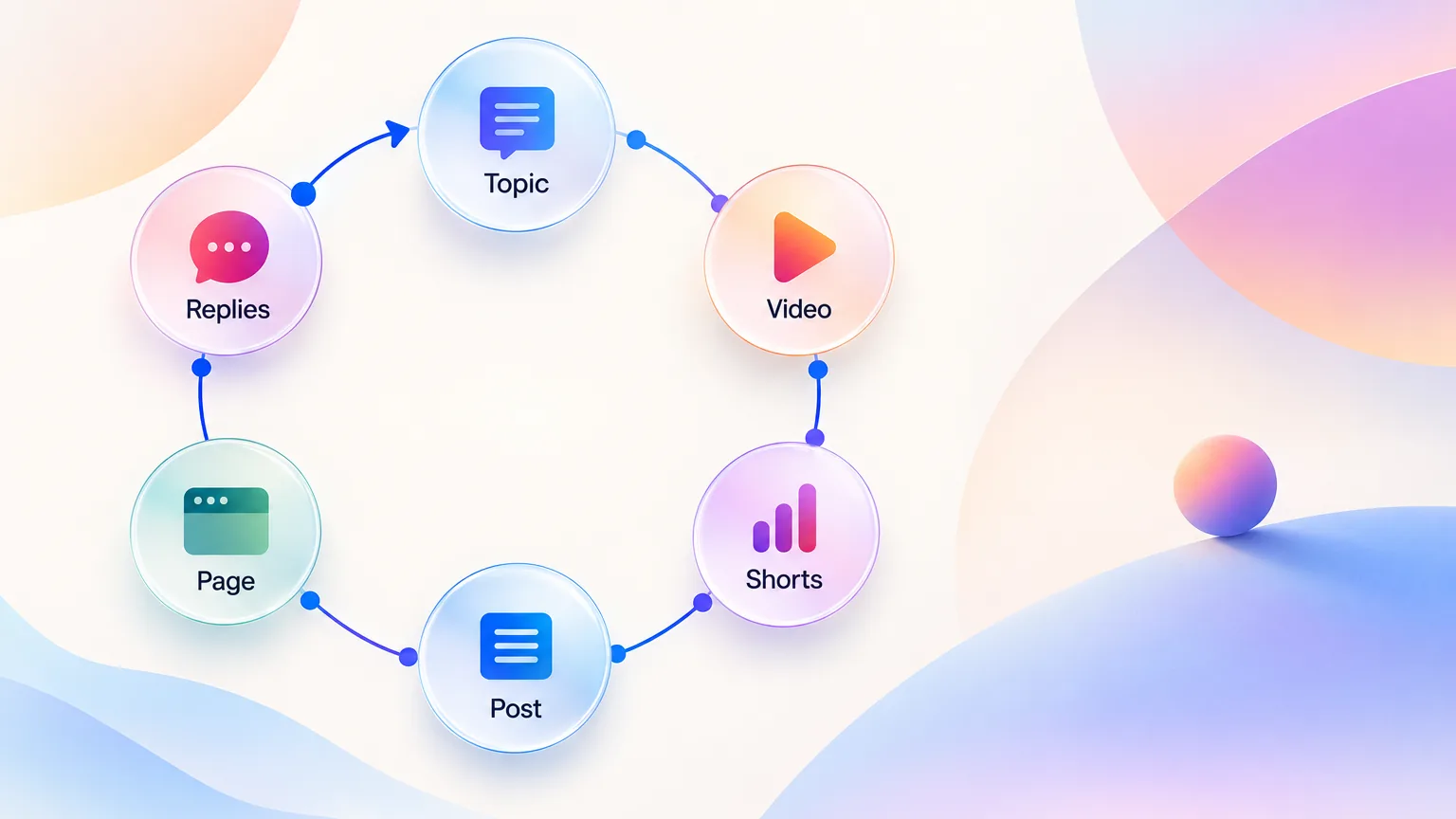
This is the same logic as a record once, publish everywhere workflow, applied to a founder's own voice. The founder records once and the format changes per channel. YouTube gets the full video. Shorts, Reels and LinkedIn get the vertical cuts. The website gets the page that search engines and AI answer engines can read.
| Asset | Cut from | Length or size | Where it goes |
|---|---|---|---|
| Main video | The recording | 3 to 6 minutes | YouTube, the website |
| Shorts | The strongest 30 to 60 seconds | 2 to 3 clips | YouTube Shorts, LinkedIn, Reels |
| LinkedIn post | The hook and the conclusion | 150 to 300 words | |
| Supporting page | The full argument plus detail | One page | Website, for search |
The cutting step is where solo founders lose the most time. For product-focused topics, a tool can take on that step. GuideClarity learns a feature once it ships. It then produces the demo video, shorts, blog post and social posts as one package. The founder reviews and publishes instead of editing (GuideClarity features). Opinion and lesson videos still need the founder on camera. That part should never be automated.
What tools does a solo founder need for founder-led content?
A solo founder needs four tools for founder-led content. The four are a notes app for topics, a screen and camera recorder, a simple editor for vertical cuts, and one or two publishing channels. Everything else is optional until the content already produces conversations. Most early spending goes on tools that solve problems the founder does not have yet.
| Category | Need it now | Skip it for now |
|---|---|---|
| Topic capture | A notes app or a doc with a running question log | Content planning software |
| Recording | Any screen recorder with a webcam overlay | A studio setup, lighting kits |
| Editing | A tool that cuts vertical clips and adds captions | A freelance video editor |
| Publishing | YouTube, LinkedIn, and the website | Five more channels |
| Writing help | An AI assistant for a first draft of the LinkedIn post | A ghostwriter |
A ghostwriter is the most common early hire, and often the wrong one. Founder-led content works because the voice is the founder's. A ghostwriter can polish it, but cannot supply the customer call, the product decision or the opinion. Hire help when the content already brings in conversations and the 4 hours no longer fit in the week. Start with editing help, because cutting is the most mechanical part.
Video spending deserves the same discipline. The analysis of which SaaS videos are worth the money sorts video types by whether they pay back. A founder clip is usually the cheapest of them.
How do you use the response to decide the next video?
You use the response by logging every question, objection and mention it creates, then choosing next week's topic from that log. The response is more than a scoreboard. It is a free research panel of the exact people the founder wants to reach. A comment that asks "does this work for X?" is next week's video. A DM that says "we have the same problem" is a sales conversation.
Track three signals, in this order of value:
- Conversations started. DMs, replies with real questions, and booked calls that mention a video.
- "I saw your video" mentions. Prospects who bring up founder content on sales calls. Ask every new lead where they first heard of you.
- Search and repeat demand. Questions that come up more than once, and topics people search for afterwards.
| Signal | Where to find it | What to do next |
|---|---|---|
| A question in the comments | LinkedIn, YouTube comments | Answer it in next week's video |
| An objection | DMs, sales calls | Make a lesson or point-of-view video about it |
| A comparison request | Comments, sales calls | Make a verdict video and a matching comparison page |
| Silence | Low replies on a topic | Change the hook before changing the topic |
Views and likes come last. They are easy to count and weakly linked to revenue. A video with modest views that produces two sales conversations beats a viral clip that produced none.
One caution applies to small audiences. With a few hundred followers, one week of replies is noisy. A topic that gets silence once may simply have gone out on a busy day. Judge a topic over three or four videos before dropping it.
Treat the log as the content plan. After a month, the founder has more topics than weeks to cover them, all sourced from real buyers. The founder essay on where AI video is going describes how product content tools are starting to handle this feedback loop too.
What mistakes do solo founders make with founder-led content?
Solo founders make five common mistakes with founder-led content. They over-produce, hire too early, talk to everyone, chase new platforms and track vanity numbers. Each one burns time a solo founder cannot spare. All five come from the same root, which is treating founder content like a brand campaign. Founder-led content is a habit built on real conversations.
- Over-producing. Spending a day on lighting and motion graphics for a clip that needed 20 minutes. Polish matters less than proof on screen.
- Hiring too early. Paying for help before the founder knows which topics land, as the tools section explains.
- Talking to everyone. Making videos for "SaaS teams" in general. Pick one buyer and make every video for that person.
- Chasing platforms. Starting on a new network every month. One channel done well beats five done badly.
- Measuring vanity numbers. Celebrating views while ignoring DMs and sales-call mentions. Count conversations instead.
Most of these fixes cost nothing. A founder who keeps one topic log, one channel, one buyer and one weekly review avoids all five.
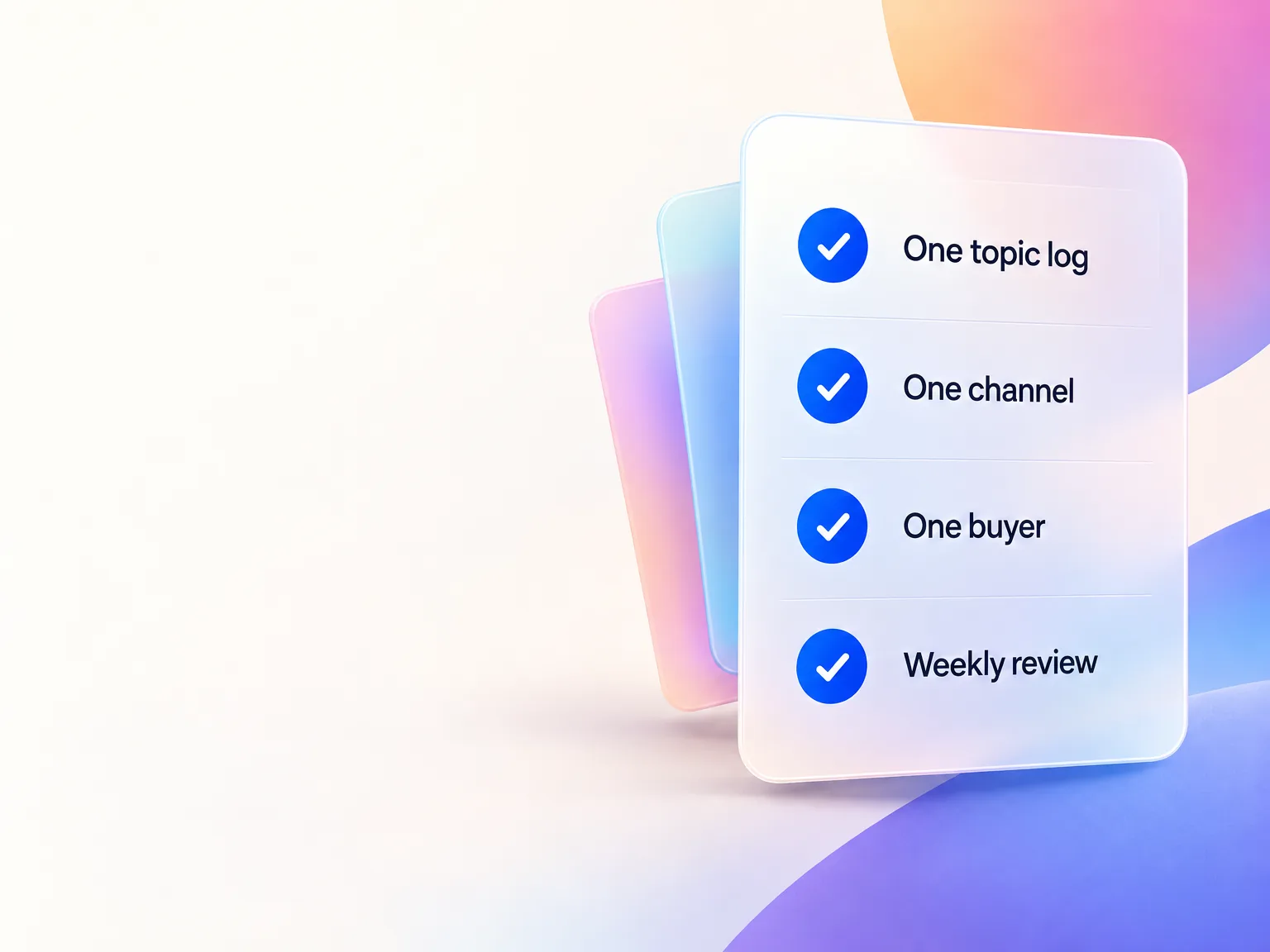
That weekly review is the whole system in small. One topic becomes one video, the video becomes a week of content, and the response chooses the next topic. Run that loop for a quarter and the founder never starts a week from a blank page again. For the broader strategy around this habit, the practical guide to SaaS content marketing covers how founder content fits next to the company blog.
Key Takeaways
- Founder-led content is the founder publishing what only they see. In B2B it now runs on video, which 78% of B2B marketers already use, according to LinkedIn and Ipsos.
- Start every video from one customer question, one useful insight, one lesson learned or one strong point of view.
- A 4-hour week covers it, with an hour each to outline, record, cut and review the response.
- Treat one main video as source material for shorts, a LinkedIn post and a supporting web page.
- Open with the useful difference and show the product on screen, because proof earns more trust than description.
- Choose next week's topic from the questions, objections and mentions this week's video produced.
Frequently Asked Questions
What is founder-led content?
Founder-led content is marketing content published under the founder's own name and voice. It draws on what the founder sees directly, such as customer calls, product decisions and market opinions. It usually runs on LinkedIn, YouTube and short video. It works because B2B buyers trust a person they can see more readily than a brand account.
How do solo founders find time for content?
Solo founders find time by capping content at a fixed weekly budget of about 4 hours and reusing one idea everywhere. One hour picks the topic, one records a main video, one cuts shorts and a post, and one handles replies. Sourcing topics from customer calls removes the blank-page time that usually eats the week.
Should I hire a ghostwriter as a solo founder?
Most solo founders should not hire a ghostwriter first. The value of founder-led content is the founder's own view and experience, which a ghostwriter cannot supply. Hire once the content already starts conversations and no longer fits in the week. Editing help for video usually pays back sooner than writing help.
How long does founder-led content take to work?
Founder-led content usually takes months of steady publishing before it brings in regular conversations, because the audience has to recognize the founder first. There is no reliable public benchmark for the exact timeline. Judge early progress by questions and DMs rather than follower counts, and keep the weekly cadence for at least a quarter before changing course.
Is video better than text for founder-led content?
Video is better when the point is something people need to see, such as a product, a workflow or a comparison. Text is faster for a quick opinion. The strongest setup uses both. One video is the source, and a LinkedIn text post carries the same idea for readers who scroll rather than watch.
Does founder-led content help founder-led sales?
Founder-led content feeds founder-led sales directly. Prospects arrive already knowing the founder's view, and the questions they ask on calls become the next videos. Ask every new lead where they first heard of the company. "I saw your video" is the clearest sign the loop is working.
What to Read Next
If you want the repurposing system behind this loop:
- Record once, publish everywhere workflow, the full process for turning one recording into many assets.
If you are building your first founder videos:
- How to make a SaaS product demo video that converts, structure and pacing for product-led videos.
If you are planning the bigger content picture:
- What is SaaS content marketing, how founder content fits with the company blog.
- The future of AI video, where automated product content is heading.