TL;DR
Loom vs Trupeer comes down to quick messages against polished output. Loom is better for everyday team video, because it records and shares in one step and its free plan never expires. Trupeer is better for product videos and training, because its AI rewrites the script, adds a voiceover and turns the same recording into a document. They solve different jobs, so many teams use both.
- Pick Loom if your team sends quick screen and camera messages every day and wants comments, reactions and free viewer seats.
- Pick Trupeer if you turn screen recordings into polished, AI-voiced product videos, how-to guides and translated docs.
- Pick GuideClarity if you want product demo videos and explainer videos generated from your live SaaS product for every release, plus the docs, shorts and blog post.
Loom vs Trupeer at a glance
The table compares Loom and Trupeer on the points buyers check first. Starting price is the cheapest paid plan in US dollars a month, with monthly billing on both. A tinted cell marks the side with the edge. We read every price and limit on each vendor's own page on September 27, 2026.
| Criterion | Loom | Trupeer |
|---|---|---|
| Best for | Quick team video messages | Polished product videos and docs |
| Starting price | $18 per user a month | $49 a month, one creator |
| Free plan | 25 videos, 5 minute recordings | Free for 10 days |
| AI voiceover | Enhancement and filler word removal | AI voiceover, captions and auto zoom |
| Docs from recordings | Not offered | DOC, PDF and Markdown on Pro |
| Recording length | Unlimited on Business | Up to 10 minutes on Pro |
| Languages | Transcription in 50+ languages | Translation of videos and docs on Scale |
| SSO from | Enterprise | Enterprise |
| Biggest limitation | No AI voiceover or docs | No lasting free plan, short recording caps |
How we compared Loom and Trupeer
Loom is a screen recorder for video messages, and Trupeer is an AI tool that turns recordings into finished videos and docs. So the choice is about the job, not only the price. We compared them on eight things buyers weigh. Those are workflow, video polish, price, documentation, collaboration, recording limits, languages and security.
- Own screenshots. Every homepage and pricing screenshot on this page is ours, taken on September 27, 2026 at 1440 pixels wide.
- Verified facts. Every price, limit and plan detail comes from the vendor's own page, and a script re-checked each one on September 27, 2026. The Sources section lists each page.
- An edge on every criterion. Each section ends with the side that wins it and the one fact that decides it. A tie is called when the answer depends on the team.
- No affiliate links. No vendor on this page pays us for a mention or a click.
GuideClarity publishes this page. It is not one of the two tools compared. Where it fits and where it does not is stated in its own section, with the same directness as the strengths and weaknesses of Loom and Trupeer.
What Loom and Trupeer are
Loom in brief
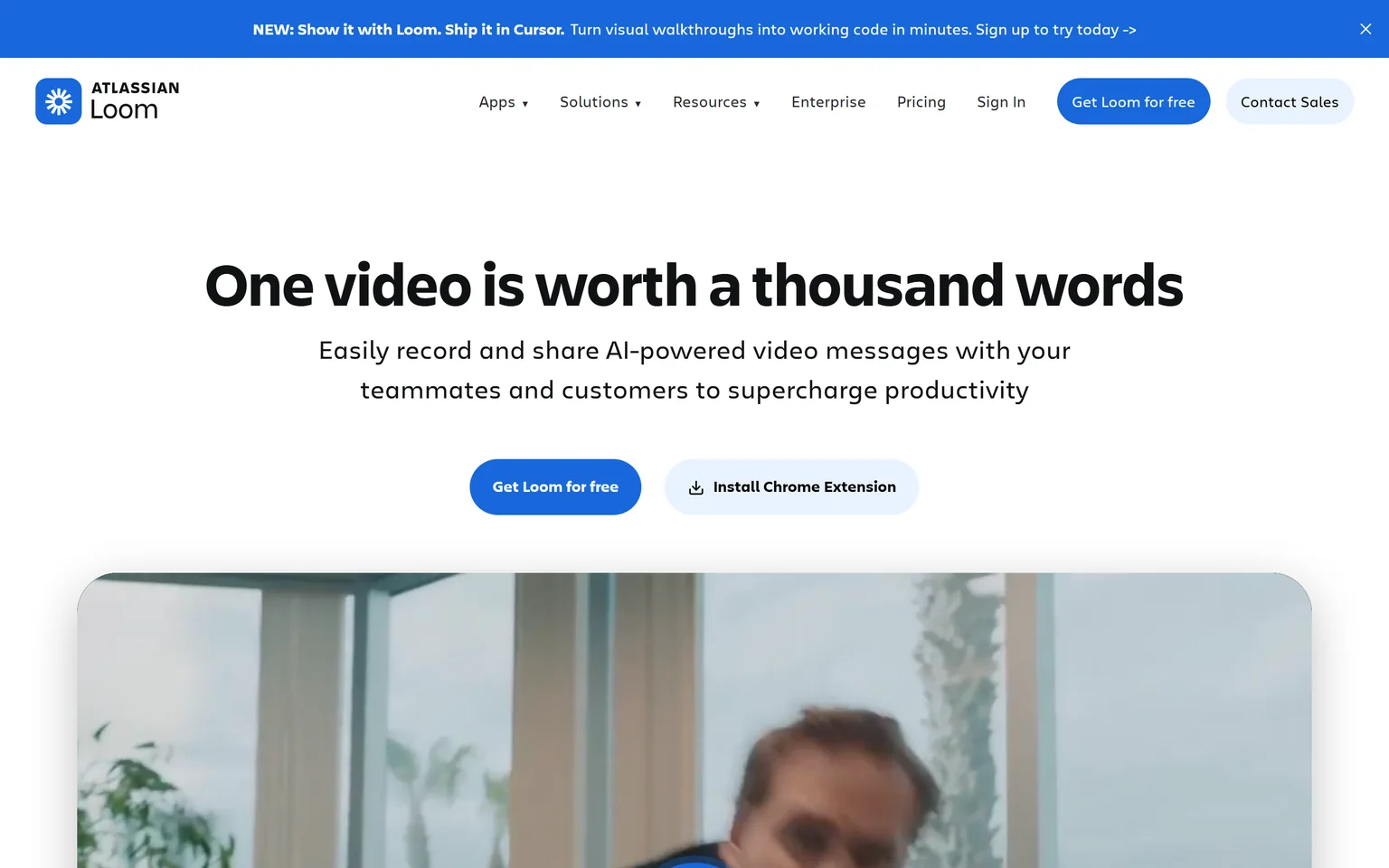
Loom lets you record and share AI-powered video messages with teammates and customers. You record your screen, your camera or both, then share a link at once. It runs from a Chrome extension, a desktop app or a mobile app. Whole companies use it instead of meetings. We compare its rivals on our Loom alternatives page.
Trupeer in brief
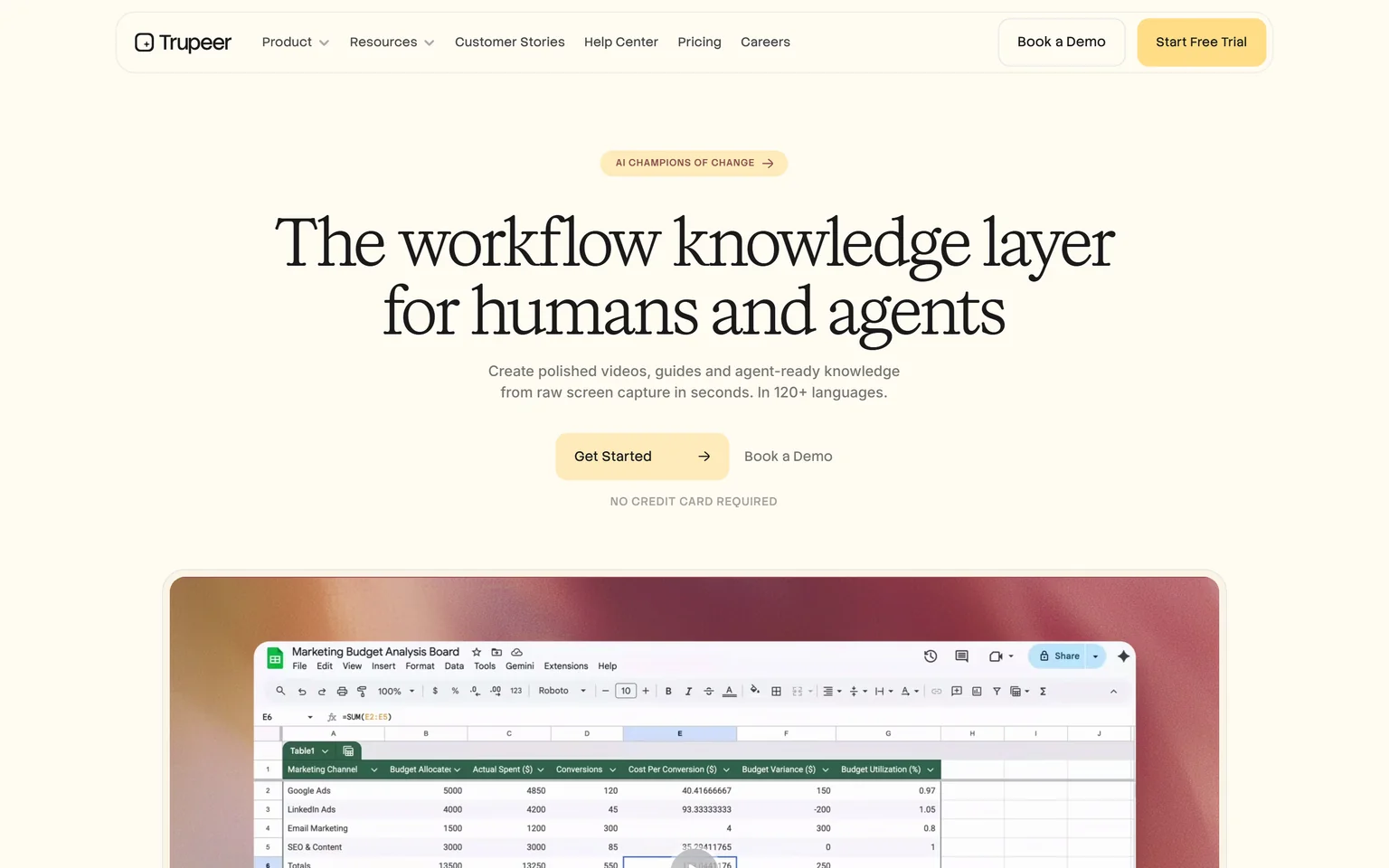
Trupeer creates polished videos, guides and agent-ready knowledge from raw screen capture, in 120+ languages. You record a rough walkthrough, and its AI fixes the script, adds a voice and builds a document. Training, support and product teams use it. We compare its rivals on our Trupeer alternatives page.
Loom vs Trupeer workflow
Loom wins on workflow speed. Loom records and shares in one step, and the link is ready when you stop recording. Loom says you just hit record and Loom AI does the rest, with instant edits, enhancements and recaps. Trupeer starts from you hitting record on a screen and talking through it, then its AI rebuilds the video before you share it.
How a typical task runs
Say a teammate asks how to set up a report. On Loom, you record a two minute walkthrough and paste the link into Slack. On Trupeer, you record the same flow, review the AI script, pick a voice and export. The Trupeer version looks finished. The Loom version is out the door sooner.
Capture options
Trupeer captures through a browser extension, uploads existing video, and handles mobile and vertical recordings. Loom adds a camera bubble to every recording, which suits personal updates and sales follow-ups. Trupeer can add lifelike avatars without a camera instead.
Edge Loom, because a video is ready to share the moment you stop recording.
Loom vs Trupeer video polish
Trupeer wins on video polish. Trupeer lists AI voiceover, AI captions and auto zoom, and Pro adds auto annotations and editing with trim, split, skip, sync and crop. The result looks like a produced tutorial. Loom Business + AI adds auto-video enhancement and filler word removal, which cleans up your own voice but keeps it.
Editing
Loom Business includes basic waveform editing, Business + AI adds advanced editing, and Loom lists editing by transcript. Trupeer lets you rewrite the script with AI and regenerate the voice, so a mistake never needs a new recording. Trupeer Scale adds a brand kit with logos, backgrounds and music.
Exports
Trupeer Pro exports MP4 video with captions, and its exports are watermark-free. Loom Business includes uploading and downloading videos, and removes Loom branding. Our guide on making a SaaS demo video that converts explains what polish buys you.
Edge Trupeer, because its AI voice, captions and zoom turn a rough take into a finished video.
Loom vs Trupeer pricing
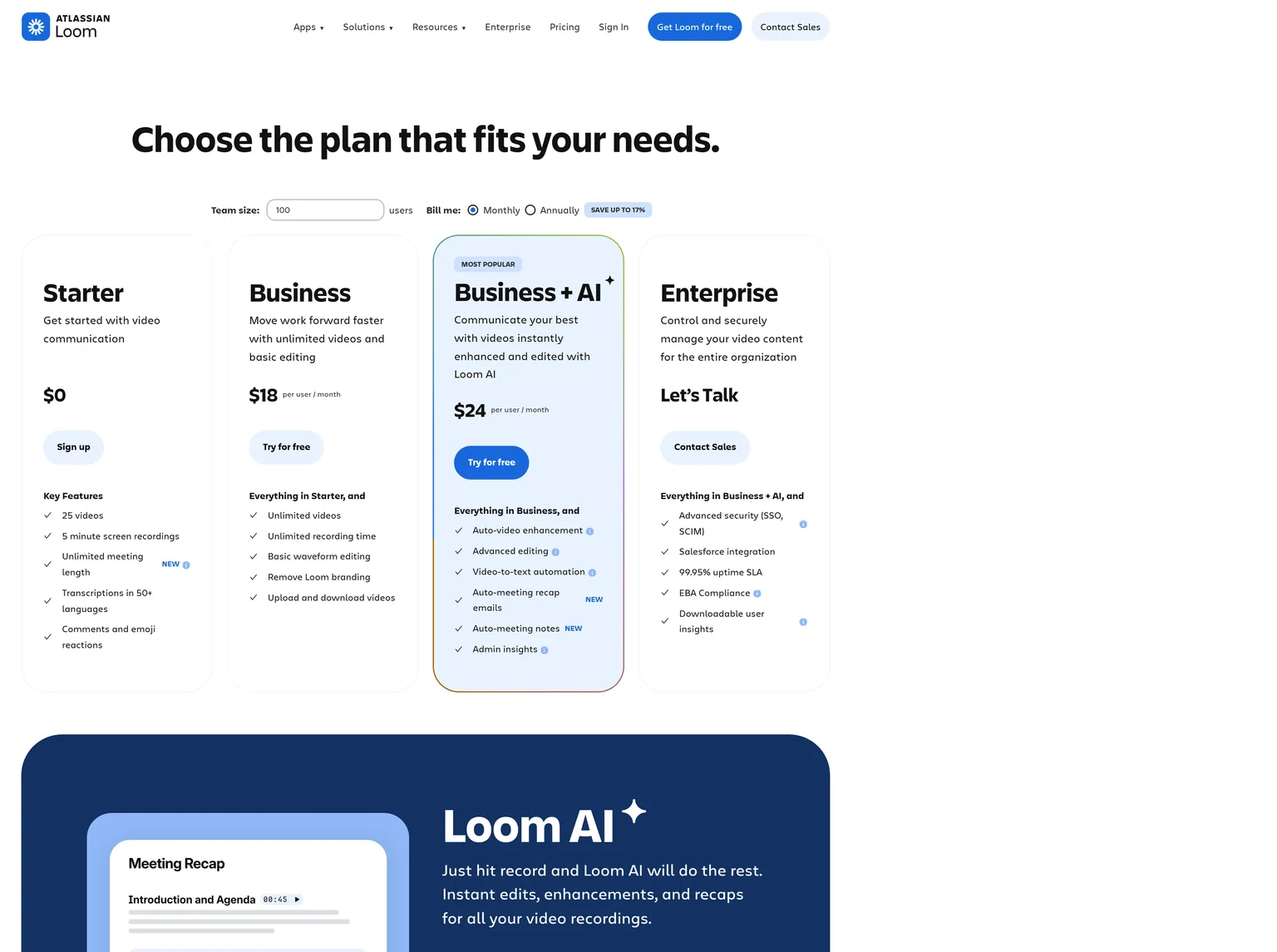
Loom wins on price. Loom Starter is free with 25 videos per person and 5 minute screen recordings, and it does not expire. Loom Business costs $18 per user a month billed monthly. Trupeer's Free plan lasts 10 days, and Trupeer Pro costs $49 a month billed monthly for one creator.
Loom pricing
Business adds unlimited videos, unlimited recording time and removes Loom branding. Business + AI costs $24 per user a month billed monthly. Enterprise adds SSO and SCIM and a Salesforce integration.
Trupeer pricing
Pro costs $40 a month billed yearly, with 2,000 AI credits a month, recordings up to 10 minutes and a single creator seat. Scale costs $199 a month billed yearly or $249 monthly, with 10,000 AI credits a month, 3 creator seats and recordings up to 15 minutes. Pro and Scale start with a free trial.
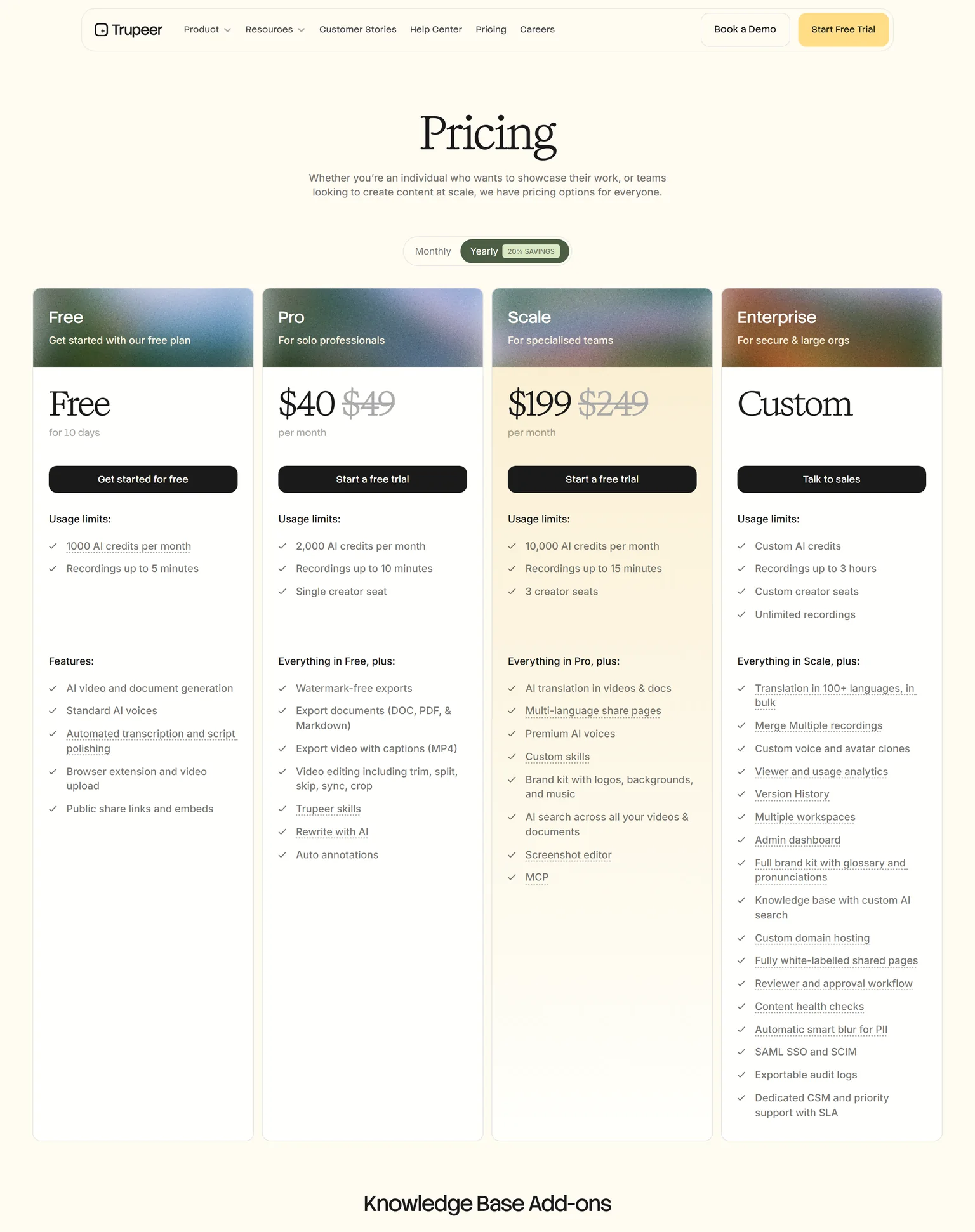
What the same money buys
For the price of one Trupeer Pro creator, a small team gets two or more Loom Business seats. Trupeer's price buys finished videos and docs that Loom does not make. Count creators, not viewers, before you compare.
Edge Loom, because its free plan never expires and its paid seat costs far less.
Loom vs Trupeer documentation
Trupeer wins on documentation, because Loom does not make documents. Trupeer's Free plan includes AI video and document generation, so one recording becomes a video and a step-by-step guide. Pro exports documents to DOC, PDF and Markdown. Loom gives you a video, a transcript and an AI recap, but not a written guide with screenshots.
A knowledge base
Trupeer's Knowledge Base add-on costs $120 a month billed yearly or $150 monthly, with unlimited articles. Scale adds AI search across all your videos and documents. That turns a library of recordings into a help center that people and AI agents can search.
Who needs this
Support, training and operations teams write the same how-to guides again and again. Trupeer removes most of that work. A team that only sends quick updates will not use it.
Edge Trupeer, because it turns each recording into a document as well as a video.
Loom vs Trupeer collaboration
Loom wins on collaboration. Loom includes comments and emoji reactions and lists viewer insights, so a video becomes a conversation. Loom Starter workspaces hold up to 50 members for free. Trupeer Pro has a single creator seat, and viewer and usage analytics arrive on Enterprise.
Sharing and integrations
Loom lists a Slack integration, so videos unfurl where teams already talk. Loom Enterprise adds a Salesforce integration for sales teams. Trupeer shares through public links and embeds, and Enterprise adds a reviewer and approval workflow for teams that publish official content. For a team where everyone records, Loom's seat model fits better. For a few creators and many viewers, Trupeer's model works too.
Edge Loom, because comments, reactions and a free 50-member workspace come without an upgrade.
Loom vs Trupeer recording limits
Loom wins on recording limits. Loom Business includes unlimited videos and unlimited recording time. Trupeer Pro caps recordings at 10 minutes, and Scale caps them at 15 minutes. Trupeer Enterprise allows recordings up to 3 hours. On the free plans, both cap recordings at five minutes.
AI credits on Trupeer
Trupeer Pro includes 2,000 AI credits a month, and Scale includes 10,000. Translation costs 100 AI credits per minute for each target language. A team making long videos or many translations will use credits quickly. Loom has no credit meter on recording. Check the length of your typical walkthrough before you pick a Trupeer plan.
Edge Loom, because Business records without a time limit or a credit meter.
Loom vs Trupeer languages
Trupeer wins on languages. Trupeer Scale adds AI translation in videos and docs and premium AI voices, and multi-language share pages. Scale includes two languages, and Enterprise includes ten. Loom Starter includes transcriptions in 50+ languages, which captions a video but does not translate the voice.
What this means for global teams
A company training staff in several countries wants one video in each language. Trupeer re-voices and re-captions the same recording. Enterprise adds bulk translation in 100+ languages. On Loom, you would record the video again in each language. Machine translation still needs a native speaker to check product terms. Test it on one real video first.
Edge Trupeer, because it translates the voice and the document, not only the captions.
Loom vs Trupeer security
Trupeer wins on security detail. Trupeer's homepage says it is ISO 27001, SOC 2 and GDPR certified. Trupeer Enterprise adds automatic smart blur for PII and exportable audit logs. Both put single sign-on on Enterprise. Loom Enterprise adds SSO and SCIM, and Trupeer Enterprise adds SAML SSO with SCIM.
What this means for buyers
Automatic PII blur matters when recordings show customer data. Loom Enterprise includes a 99.95% uptime SLA, which matters when a whole company depends on video messages. Ask each vendor for its security documents before you roll it out. Teams without an SSO rule will find both safe for everyday use.
Edge Trupeer, because it lists its certifications and blurs personal data in recordings on Enterprise.
Loom vs Trupeer: which should you choose
Choose by the job. If your team sends quick updates, feedback and walkthroughs every day, Loom wins, with a lasting free plan and cheap seats. If you publish product videos, training and help docs that must look finished and work in many languages, Trupeer wins. Many teams keep Loom for chat and add Trupeer for content.
Loom strengths and weaknesses
Strengths
- Record and share in one step.
- A free plan that never expires.
- Comments, reactions and viewer insights.
- Unlimited recording time on Business.
Weaknesses
- No AI voiceover or script rewrite.
- No written guides from recordings.
- Transcription only, no voice translation.
Trupeer strengths and weaknesses
Strengths
- AI voiceover, captions and auto zoom.
- Docs in DOC, PDF and Markdown from each recording.
- Translation of videos and docs.
- ISO 27001, SOC 2 and GDPR listed.
Weaknesses
- The free plan lasts 10 days.
- Recordings capped at 10 or 15 minutes below Enterprise.
- One creator seat on Pro.
- If your team replaces meetings with quick videos, pick Loom.
- If you need a free tool with no end date, pick Loom Starter.
- If you publish product tutorials and help docs, pick Trupeer.
- If you train staff in several languages, pick Trupeer Scale.
- If you are weighing Loom against other tools, see our Screen Studio vs Loom and GuideClarity vs Loom comparisons.
- If you are weighing Clueso against Trupeer, see our Clueso vs Trupeer comparison.
- If you are weighing Guidde against Trupeer, see our Guidde vs Trupeer comparison.
- If you ship SaaS features and want the launch videos and content generated from the product, pick GuideClarity.
Where GuideClarity fits between Loom and Trupeer
Loom records quick messages, and Trupeer polishes recordings into training videos and docs. GuideClarity focuses on product marketing. It generates the product demo video and the explainer video for each new feature, then the docs, shorts, blog post and social posts. It suits SaaS teams that ship often and need launch content for every channel. Teams that mainly send updates should keep Loom, and training teams should look at Trupeer.
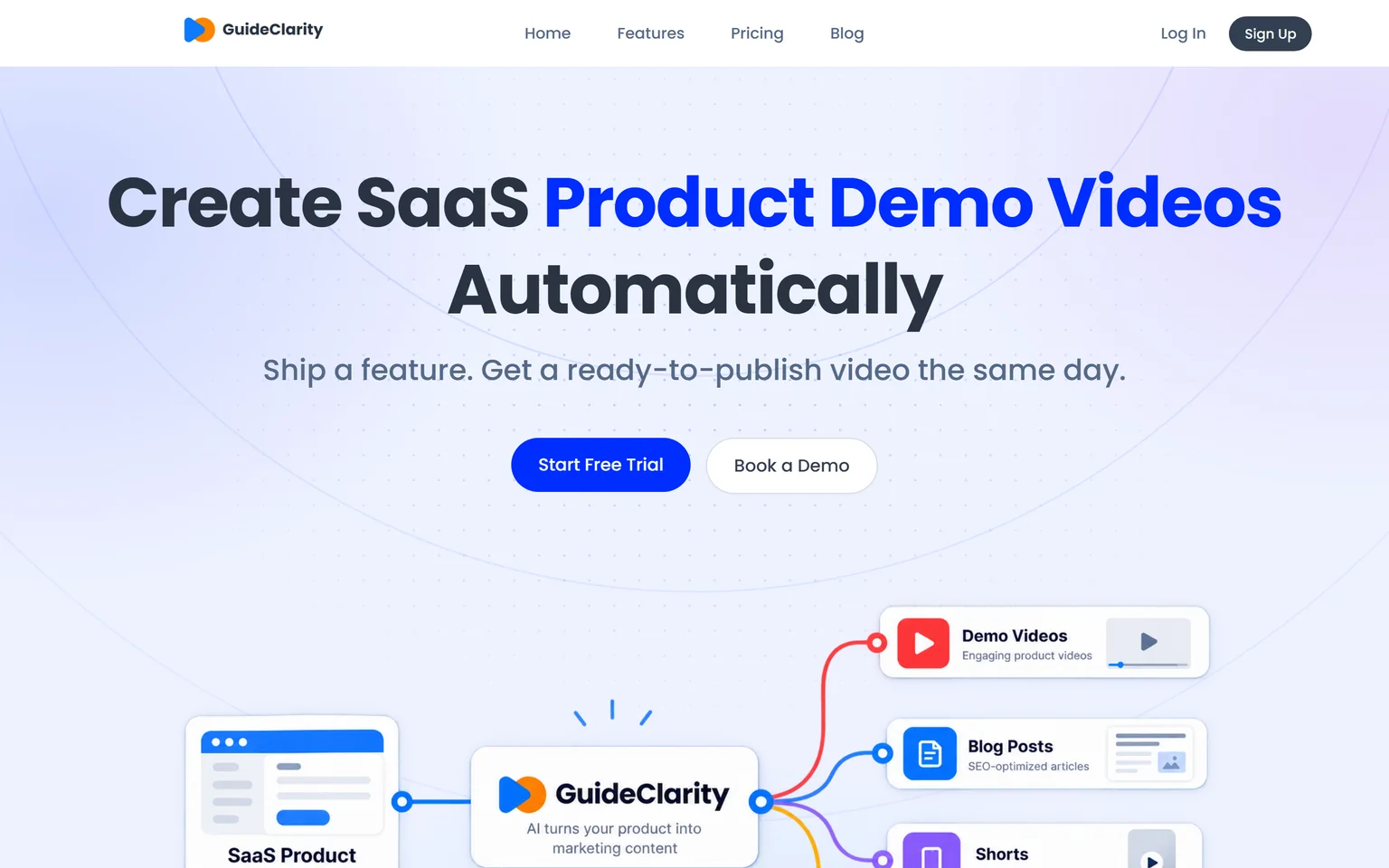
GuideClarity pricing
The free plan includes 3 video guide recordings with AI voiceover and 6 marketing videos. Pro costs $59 a month billed monthly, or $49 a month billed yearly. Business costs $99 a month. Paid plans carry a 14-day money-back guarantee.
Strengths
- Builds the product demo video and explainer video from the product.
- One feature in, a whole launch kit out, with shorts, docs and a blog post.
- Made for marketing launches, not only internal training.
- A free plan to test on a real feature.
Weaknesses
- Not a video messaging tool. Quick team updates belong in Loom.
- Built for SaaS product content, not for internal SOPs across every tool.
GuideClarity vs Loom and Trupeer
GuideClarity creates SaaS product demo videos automatically. It turns one release into a demo video, shorts, a blog post, social posts, screenshots and an announcement. Trupeer also polishes screen recordings with AI, so compare the two on your next feature. The GuideClarity features page lists every output. Our guide to personalized video demos shows how launch videos drive adoption.
Frequently asked questions about Loom vs Trupeer
Is Trupeer better than Loom?
Trupeer is better for finished product videos and docs, with AI voiceover, captions and auto zoom and document export on Pro. Loom is better for quick team messages, with comments, reactions and viewer insights and a lasting free plan. So in Trupeer vs Loom, a training team leans Trupeer and a busy team leans Loom.
Is Trupeer AI free to use?
Only for a short time. Trupeer's Free plan lasts 10 days, with 1000 AI credits a month and recordings up to 5 minutes. After that, Pro costs $40 a month billed yearly. Pro and Scale also start with a free trial. Loom's Starter plan is free with no end date.
How much does Loom cost per month?
Loom Starter is free with 25 videos per person. Loom Business costs $18 per user a month billed monthly, with unlimited videos and recording time. Business + AI costs $24 per user a month billed monthly. Enterprise adds SSO and SCIM at a custom price.
Is there anything better than Loom?
It depends on the job. For polished product videos and docs, Trupeer does more than Loom. For product demo videos made from each release, GuideClarity fits better. For quick team messages, Loom is still hard to beat on price. Our Loom alternatives page compares more options with verified prices.
What is a good free video creator similar to Loom?
Loom's own free plan is the easiest start, with 25 videos per person and 5 minute recordings. Trupeer is free only for ten days. GuideClarity's free plan includes 3 video guide recordings with AI voiceover and 6 marketing videos, which suits product videos rather than messages.
How did you verify the prices on this page?
We opened each vendor's pricing page in a browser on September 27, 2026 and saved its text. A script then checked every quoted price and limit against that saved page. Loom's page opened on monthly billing, and we clicked Yearly on Trupeer to read both prices. We took our own screenshots the same day.
Sources and verification
Every fact above was read on the pages below on September 27, 2026. The vendor's own page wins over any third-party listing when they disagree. Prices change, so check the vendor before you buy.
- Loom pricing page, checked September 27, 2026.
- Loom homepage, checked September 27, 2026.
- Trupeer pricing page, checked September 27, 2026.
- Trupeer homepage, checked September 27, 2026.
- GuideClarity pricing page, checked September 27, 2026.
- GuideClarity homepage, checked September 27, 2026.
Need product videos for every release? GuideClarity generates the demo video, the explainer video, the shorts, the blog post and the social posts from your live product.
The free plan includes 3 video guide recordings with AI voiceover, so you can run a real feature through it before paying.