TL;DR
Storylane vs Arcade comes down to sales depth against creative speed. Storylane is better for sales-led teams, because it reaches HTML demos, Hubs and single sign-on on plans with a listed price. Arcade is better for marketing teams, because it pairs interactive demos with AI product videos, visuals and a brand kit from the free plan up. Their entry prices sit within a few dollars of each other.
- Pick Storylane if your sellers need HTML demos, a sales room for the buying group and SSO without an enterprise contract.
- Pick Arcade if your marketing team wants fast, on-brand demos plus AI product videos and visuals from one tool.
- Pick GuideClarity if you want product demo videos and explainer videos generated from your live SaaS product for every release, plus the docs, shorts and blog post.
Storylane vs Arcade at a glance
The table compares Storylane and Arcade on the points buyers check first. Starting price is the cheapest paid plan in US dollars a month, with yearly billing. A tinted cell marks the side with the edge. We read every price and limit on each vendor's own page on September 27, 2026.
| Criterion | Storylane | Arcade |
|---|---|---|
| Best for | Sales-led demo teams | Marketing teams that want demos and AI video |
| Starting price | $40 a month, yearly | $42.50 per seat a month, yearly |
| Free plan | 1 seat, 1 published demo | 1 demo, 1 video, 200 AI credits a month |
| HTML demos from | Growth at $500 a month | Enterprise, custom price |
| AI product videos | Video export of demos | AI video agent |
| Sales rooms | Hubs | Audience Reveal |
| Translations from | Premium | Growth |
| SSO from | Premium at $1200 a month | Enterprise, custom price |
| Biggest limitation | HTML, Salesforce and SSO sit on higher plans | HTML capture and SSO only on Enterprise |
How we compared Storylane and Arcade
Storylane and Arcade both build interactive demos, but Arcade now leads with AI video. So the choice is about what each plan unlocks and which team will use it. We compared them on eight things buyers weigh. Those are price, demo formats, AI video, branding, sales features, integrations, languages and security.
- Own screenshots. Every homepage and pricing screenshot on this page is ours, taken on September 27, 2026 at 1440 pixels wide.
- Verified facts. Every price, limit and plan detail comes from the vendor's own page, and a script re-checked each one on September 27, 2026. The Sources section lists each page.
- An edge on every criterion. Each section ends with the side that wins it and the one fact that decides it. A tie is called when the answer depends on the team.
- No affiliate links. No vendor on this page pays us for a mention or a click.
GuideClarity publishes this page. It is not one of the two tools compared. Where it fits and where it does not is stated in its own section, with the same directness as the strengths and weaknesses of Storylane and Arcade.
What Storylane and Arcade are
Storylane in brief
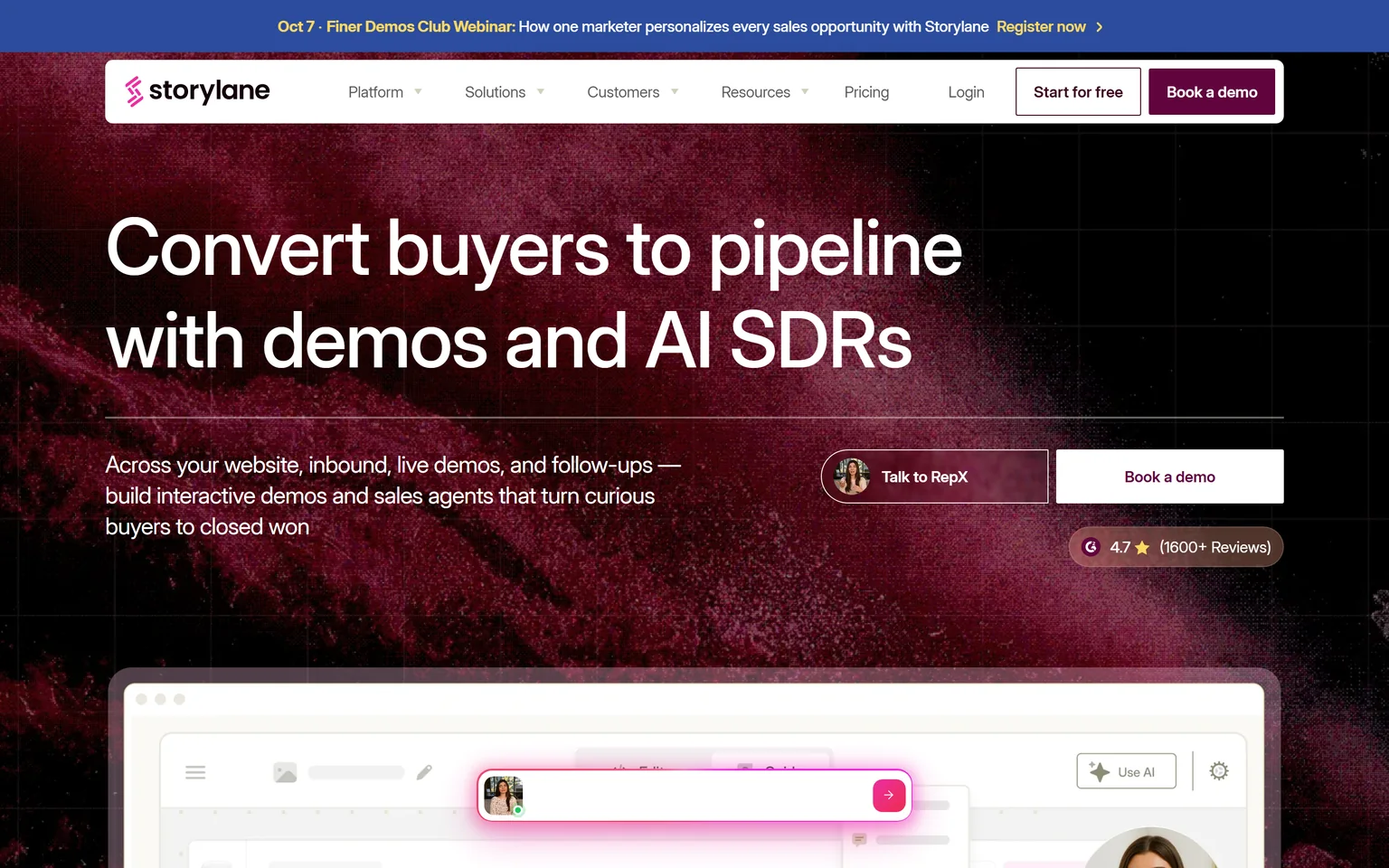
Storylane builds interactive demos and AI SDRs that convert buyers to pipeline. It captures screenshots, video or HTML into guided demos, then adds Hubs as sales rooms and RepX as an AI agent for your website. Product marketers and sales teams buy it, from single founders to large revenue teams.
Arcade in brief
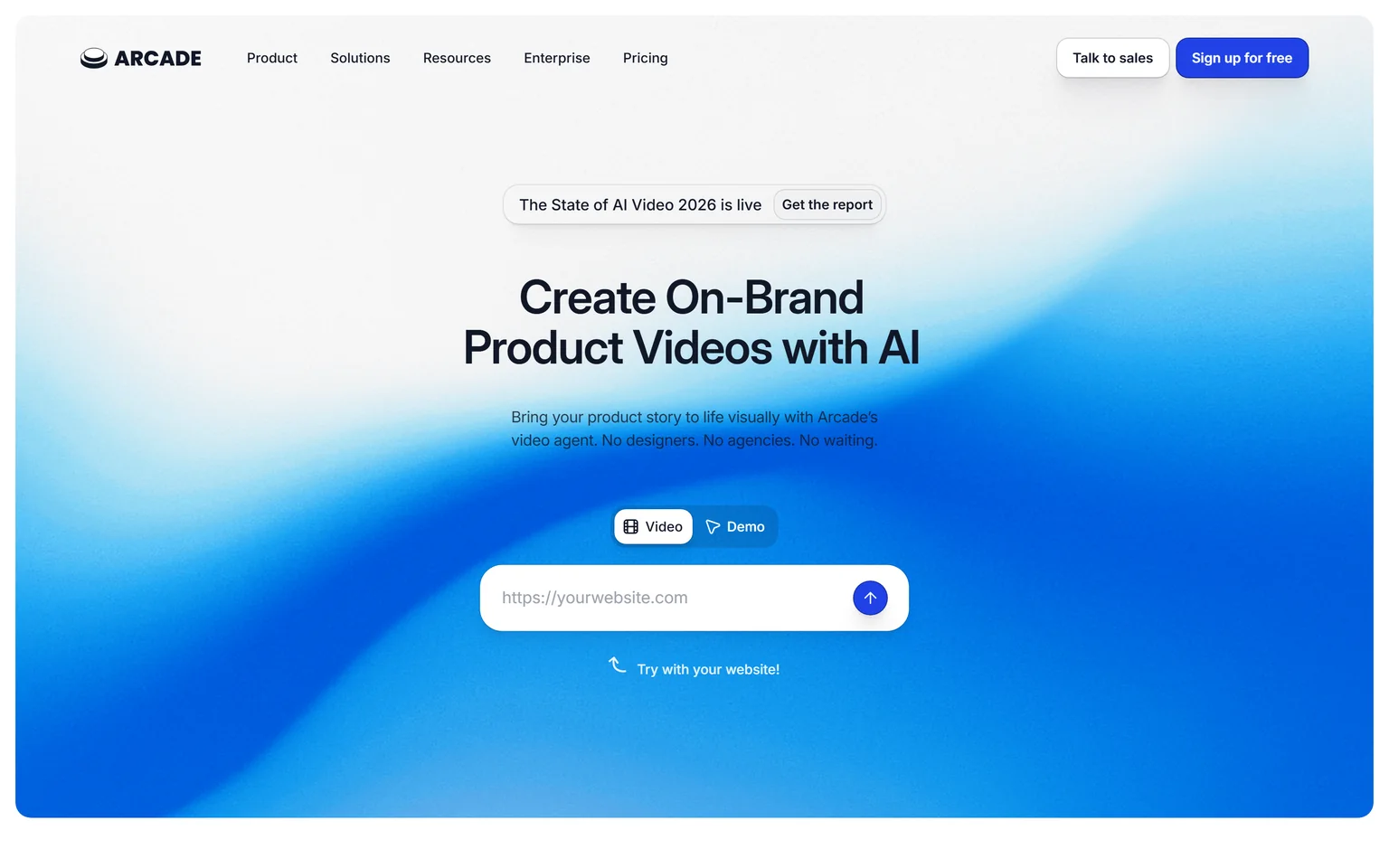
Arcade creates on-brand product videos with AI through a video agent, alongside interactive demos and visuals. Its homepage says more than 30k companies choose Arcade. Product marketers, growth marketers and sales engineers use it. We compare its rivals on our Arcade alternatives page.
Storylane vs Arcade pricing
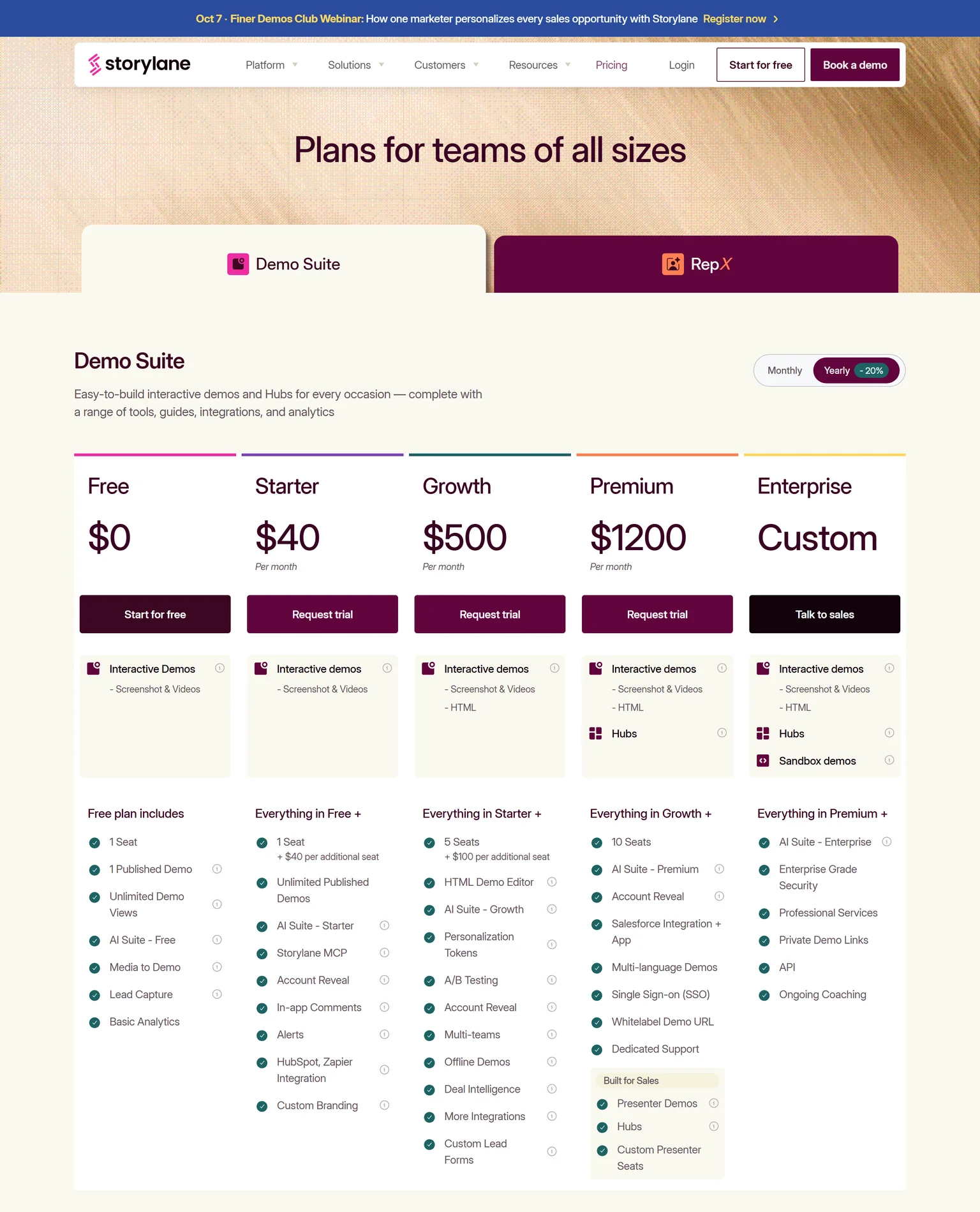
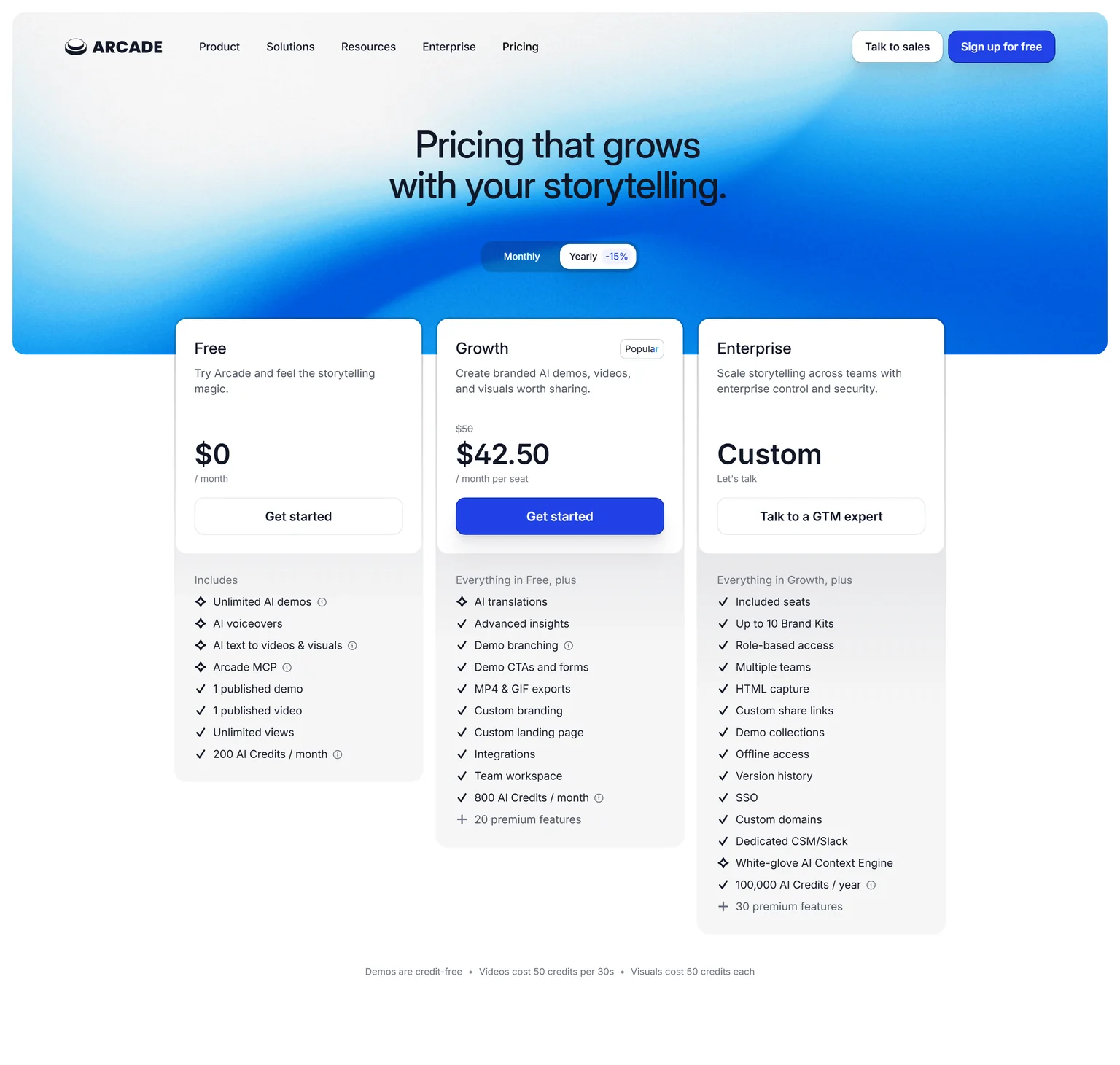
Storylane wins on price by a small margin. Storylane Starter costs $40 a month with yearly billing, plus $40 per additional seat. Arcade Growth shows $42.50 a month per seat with yearly billing, and extra Growth seats cost $50 a month. The gap grows with every seat. Both have free plans, and Arcade's includes a video and AI credits.
Storylane pricing
The Free plan costs $0 with 1 seat and 1 published demo. Starter costs $50 a month with monthly billing. Growth costs $500 a month and includes 5 seats, and extra Growth seats cost $100 each. Premium costs $1200 a month and includes 10 seats.
Arcade pricing
The Free plan costs $0 a month and includes 1 published demo, 1 published video and 200 AI credits a month. Growth is listed at $50 a month per seat, with 15 percent off on yearly billing. Growth covers up to 10 users. Enterprise is custom priced. Arcade offers Growth discounts to companies before their Series A.
What the same money buys
For five builders, Storylane Starter and Arcade Growth land close together each month. Storylane Growth costs more but adds HTML demos. Arcade Growth adds AI credits for video, which Storylane does not sell. Arcade lets you unsubscribe anytime by moving to the Free plan.
Edge Storylane, because its entry plan and its extra seats list slightly lower than Arcade's.
Storylane vs Arcade demo formats
Storylane wins on demo formats. Storylane builds screenshot and video demos on every plan and adds the HTML demo editor on Growth, a plan with a listed price. Arcade keeps HTML capture for Enterprise, which is custom priced. HTML demos let you edit text and data after capture, so a demo stays accurate longer. Storylane Enterprise adds sandbox demos on top.
Capture
Capture is close to identical. Arcade records through a Chrome extension, a desktop app for Mac and Windows, and a Figma plugin, and it can also record your camera and upload media. Storylane's plan comparison lists a Chrome extension, a desktop app for Mac and Windows, and a Figma plugin.
Sharing and export
Arcade shares demos as a link or embed, exports GIF and MP4, and creates step-by-step guides. MP4 and GIF exports start on Growth. Storylane exports demos as GIF, video and PDF. Both cover email, docs and slides as well as the live embed.
Edge Storylane, because HTML demos come on a plan with a listed price.
Storylane vs Arcade AI video
Arcade wins on AI video by a wide margin. Arcade creates on-brand product videos with AI through a video agent, and even the free plan includes AI voiceovers and AI text to videos and visuals. Arcade says it takes 6 minutes on average to create a new video. Storylane exports a demo as video, but it does not generate product videos.
How Arcade credits work
Arcade demos are credit-free, and AI visuals cost 50 credits each. AI videos cost 50 credits per 30 seconds, and Growth includes 800 AI credits a month. Enterprise includes 100,000 AI credits a year. A team making several launch videos a month should count credits before buying.
AI on the Storylane side
Storylane includes an AI suite on the free plan, with larger suites on higher tiers. Storylane's RepX greets website visitors, handles product questions and books qualified meetings. That is sales AI, not creative AI.
Edge Arcade, because it generates product videos and visuals with AI from the free plan up.
Storylane vs Arcade branding
Arcade wins on branding. Arcade's Brand Kit pulls logos, colors, fonts and writing style from your website, so new demos and videos start on brand. Arcade Growth adds custom branding and a team workspace. Storylane Starter includes custom branding too, but you set it up by hand.
Polish in practice
Arcade is built for marketing assets that need to look designed. A demo, a short video and a social visual can share one look without a designer. Storylane's strength is the guided flow and the sales motion around it. Its demos look clean, but it does not generate visuals. Storylane Premium adds a whitelabel demo URL for teams that want their own domain on shared demos.
Edge Arcade, because its Brand Kit pulls your brand from your website automatically.
Storylane vs Arcade sales features
Storylane wins on sales features. A Storylane Hub is a digital sales room your champion can forward, with demos and documents in one link. Storylane Premium adds presenter demos and custom presenter seats for live calls. Growth adds deal intelligence and account reveal. Arcade focuses on marketing and product teams, with lighter sales tooling.
Lead capture and signals
Arcade Growth adds demo CTAs and forms, demo branching and advanced insights. Its plan comparison lists Audience Reveal to show which companies viewed a demo. Storylane includes lead capture and basic analytics on the free plan. Our guide to personalized video demos covers which signals matter.
Edge Storylane, because Hubs, presenter demos and RepX give sellers tools built for running deals.
Storylane vs Arcade integrations
Integrations are a tie. Storylane Starter includes a HubSpot and Zapier integration, and Arcade Growth includes integrations. For Salesforce, Storylane adds the Salesforce integration and app on Premium. Arcade's plan comparison lists a native Salesforce integration, marked with a note. Ask Arcade which plan includes it before you buy.
What this means for each team
A HubSpot team is covered by both from the first paid plan. A Salesforce team knows Storylane's price upfront, at $1200 a month on Premium. On Arcade, the Salesforce answer needs a quick sales conversation. Our SaaS demo software buyers guide explains how to weigh CRM needs.
Edge Tie, because both connect a CRM from the first paid plan and neither puts Salesforce on it with certainty.
Storylane vs Arcade languages
Arcade wins on languages. Arcade Growth adds AI translations, so one demo can serve several markets on a mid-priced plan. Storylane Premium adds multi-language demos, and Premium lists at $1200 a month. A team selling in Europe and Asia reaches translation far sooner on Arcade.
What this means for global teams
Machine translation still needs a native speaker to check product terms. Arcade's AI voiceovers can read the translated text, which helps with narrated demos. Test both on your own product in your target languages before you commit. Storylane Growth adds personalization tokens, A/B testing and offline demos, which help tailor one demo per account even without translation.
Edge Arcade, because AI translations come on Growth instead of a top plan.
Storylane vs Arcade security
Storylane wins on security access. Storylane's plan comparison lists SOC2 Type II, GDPR and SSO (SAML), with single sign-on on Premium at a listed price. Arcade's plan comparison lists SOC2 compliance and security reviews, but Arcade keeps SSO for Enterprise, which is custom priced. That means a sales process for SSO on Arcade.
What this means for buyers
A company that needs SSO can buy Storylane Premium without a custom contract. On Arcade, the same need means Enterprise, which also adds role-based access, multiple teams and version history. Teams without an SSO rule will find both safe on paper. For hands-on help, Storylane Premium adds dedicated support, and Arcade Enterprise adds a dedicated CSM and Slack channel.
Edge Storylane, because single sign-on comes on a plan with a listed price.
Storylane vs Arcade: which should you choose
Choose by which team owns the tool. If sales owns it, Storylane wins, with HTML demos, Hubs, presenter demos and SSO on listed plans. If marketing owns it, Arcade wins, with AI product videos, visuals, a brand kit and translations on Growth. Both start free, so build the same demo in each before deciding.
Storylane strengths and weaknesses
Strengths
- HTML demos on Growth at a listed price.
- Hubs and RepX for sales teams.
- SSO on Premium without a custom contract.
- A slightly lower entry price per seat.
Weaknesses
- No AI product video generation.
- Translation waits for Premium.
- Salesforce waits for Premium.
Arcade strengths and weaknesses
Strengths
- AI product videos and visuals from the free plan.
- A Brand Kit pulled from your website.
- AI translations on Growth.
- Credit-free demos, with credits only for video and visuals.
Weaknesses
- HTML capture only on Enterprise.
- SSO only on Enterprise.
- No sales room like Storylane's Hubs.
- If your sellers share demos with a buying group, pick Storylane for Hubs.
- If you need HTML demos at a listed price, pick Storylane Growth.
- If your marketing team wants demos, videos and visuals in one tool, pick Arcade.
- If you sell in several languages on a mid-sized budget, pick Arcade Growth.
- If you are weighing Storylane against other demo tools, see our Storylane vs Supademo, Storylane vs Navattic and Storylane vs Walnut comparisons.
- If you are weighing Arcade against a cheaper per-creator demo tool, see our Supademo vs Arcade comparison.
- If you ship SaaS features and want the launch videos and content generated from the product, pick GuideClarity.
Where GuideClarity fits between Storylane and Arcade
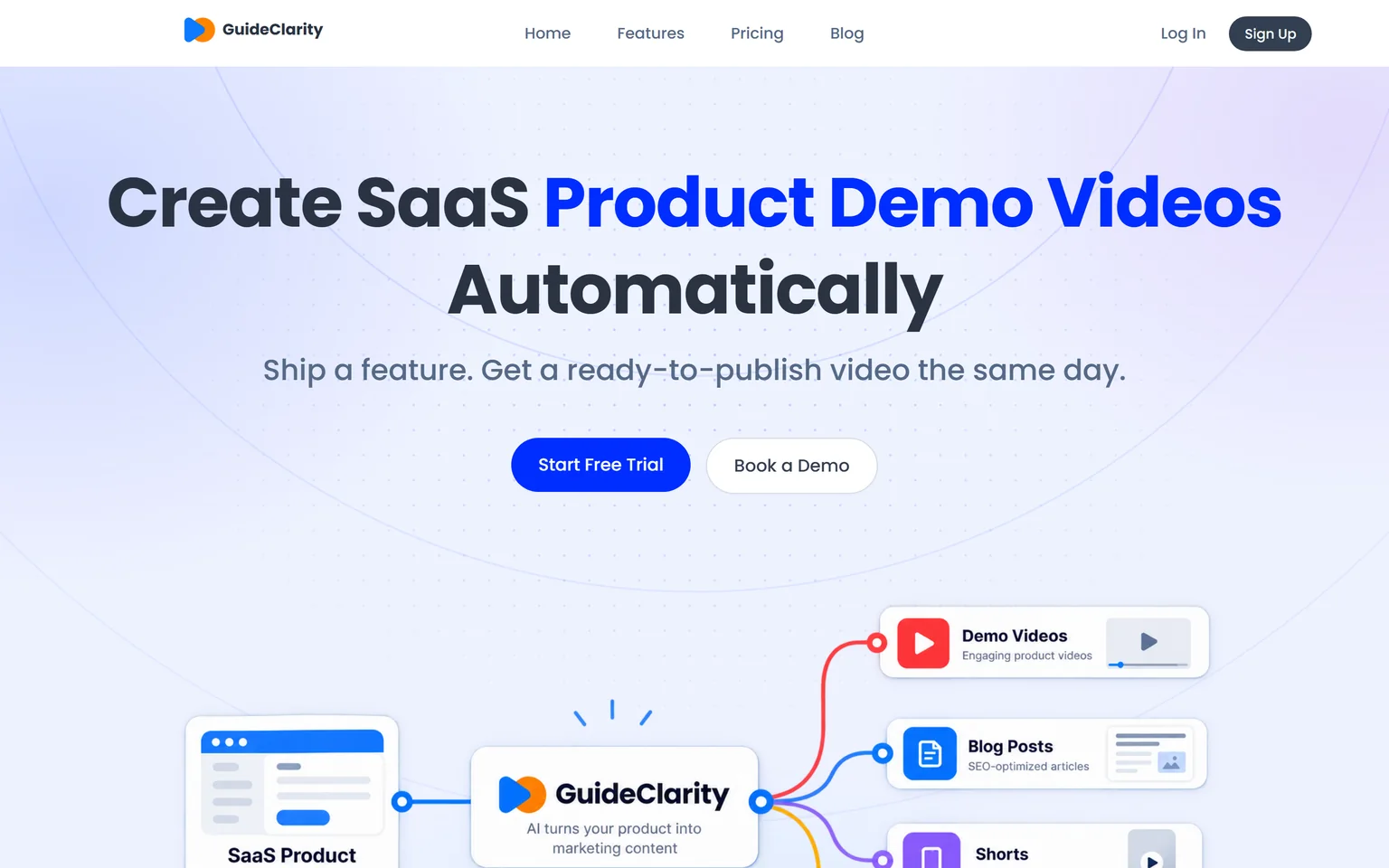
Storylane builds clickable demos, and Arcade adds AI videos and visuals to its demos. GuideClarity starts from each new feature instead. It generates the product demo video and the explainer video from the live product, then the docs, shorts, blog post and social posts. It suits SaaS teams that ship often and want a full launch kit per release. Teams whose buyers must click through the product should pick Storylane or Arcade.
GuideClarity pricing
The free plan includes 3 video guide recordings with AI voiceover and 6 marketing videos. Pro costs $59 a month billed monthly, or $49 a month billed yearly. Business costs $99 a month. Paid plans carry a 14-day money-back guarantee.
Strengths
- Builds the product demo video and explainer video from the product.
- One feature in, a whole launch kit out, with shorts, docs and a blog post.
- Video plays anywhere, including email, social feeds and YouTube.
- A free plan to test on a real feature.
Weaknesses
- Not a clickable demo builder. Hands-on tours belong in Storylane or Arcade.
- Built for SaaS product content, not for sales rooms or buyer agents.
GuideClarity vs Storylane and Arcade
GuideClarity creates SaaS product demo videos automatically. It turns one release into a demo video, shorts, a blog post, social posts, screenshots and an announcement. Arcade also makes AI product videos, so compare the two on your next launch. The GuideClarity features page lists every output. Our guide on making a SaaS demo video that converts shows when a video beats a tour.
Frequently asked questions about Storylane vs Arcade
Is Arcade better than Storylane?
Arcade is better for marketing teams, with an AI video agent, a Brand Kit and AI translations on Growth. Storylane is better for sales teams, with Hubs, presenter demos and SSO on Premium. So in Arcade vs Storylane, a marketing-led team leans Arcade and a sales-led team leans Storylane.
Which is cheaper, Storylane or Arcade?
Storylane is slightly cheaper to start. Storylane Starter costs $40 a month with yearly billing, and Arcade Growth shows $42.50 a month per seat with yearly billing. Extra seats cost $40 on Storylane Starter and $50 on Arcade Growth. Arcade's price includes AI credits for video and visuals.
Do Storylane and Arcade have free plans?
Both do. Storylane's Free plan includes 1 seat and 1 published demo. Arcade's Free plan includes 1 published demo, 1 published video and 200 AI credits a month. Arcade's free plan is the better place to test AI video. Our Arcade alternatives page lists other free options.
Which one supports HTML demos?
Both do, on different plans. Storylane Growth adds the HTML demo editor at $500 a month. Arcade Enterprise adds HTML capture, with a custom price. For a sandbox buyers can click through freely, Storylane Enterprise adds sandbox demos. Storylane's paid plans also offer a trial on request.
Can Arcade make product videos?
Yes. Arcade creates on-brand product videos with AI through a video agent. AI videos cost 50 credits per 30 seconds, and Growth includes 800 AI credits a month. Storylane exports demos as video but does not generate product videos with AI.
How did you verify the prices on this page?
We opened each vendor's pricing page in a browser on September 27, 2026 and saved its text. A script then checked every quoted price and limit against that saved page. Arcade's yearly price did not appear in the page text, so we checked it against our own screenshot. We quote yearly prices on both sides.
Sources and verification
Every fact above was read on the pages below on September 27, 2026. The vendor's own page wins over any third-party listing when they disagree. Prices change, so check the vendor before you buy.
- Storylane pricing page, checked September 27, 2026.
- Storylane homepage, checked September 27, 2026.
- Arcade pricing page, checked September 27, 2026.
- Arcade homepage, checked September 27, 2026.
- GuideClarity pricing page, checked September 27, 2026.
- GuideClarity homepage, checked September 27, 2026.
Need product videos for every release? GuideClarity generates the demo video, the explainer video, the shorts, the blog post and the social posts from your live product.
The free plan includes 3 video guide recordings with AI voiceover, so you can run a real feature through it before paying.