TL;DR
The best Storylane alternatives depend on why you are leaving. GuideClarity is the pick for SaaS teams that want product demo videos and explainer videos generated from the live product, with the docs, shorts and blog post from the same feature. Supademo is the cheapest route to HTML demos, Arcade adds AI video, HowdyGo drops per-seat pricing, Navattic suits marketing sites, Walnut suits sales teams and Reprise suits enterprise sandboxes.
- GuideClarity, best for generating product demo videos and explainer videos from a live product feature automatically, plus the docs, shorts and blog post.
- Supademo, best for HTML demos at a lower price than Storylane Growth.
- Arcade, best for screenshot demos plus AI product videos.
- HowdyGo, best for unlimited users and HTML demos on one plan.
- Navattic, best for HTML demos on marketing sites.
- Walnut, best for sales teams that personalize demos per deal.
- Reprise, best for enterprise sandbox demos cloned from the live app.
Storylane alternatives compared at a glance
The table compares the seven Storylane alternatives on the points buyers check first. Starting price is the cheapest paid plan in US dollars, at the billing period the cell names. The free plan column gives the cap that matters most. We read every price on the vendor's own pricing page on September 30, 2026.
| Tool | Best for | Starting price | Free plan | Biggest limitation |
|---|---|---|---|---|
| GuideClarity | Product videos, explainers, blog posts and other marketing assets from product features | $59 a month | Yes, 3 video guide recordings | Built for SaaS product content only |
| Supademo | HTML demos for less | $38 per creator a month, yearly | Yes, 5 guided interactive demos | Priced per creator |
| Arcade | Screenshot demos plus AI video | $42.50 per seat a month, yearly | Yes, 1 published demo | HTML capture only on Enterprise |
| HowdyGo | Unlimited users and HTML demos | $159 a month, annual | No, a 14-day trial | No free plan |
| Navattic | HTML demos for marketing | $500 a month, billed annually | Yes, 1 demo | High entry price for one or two users |
| Walnut | Sales teams and deal rooms | $575 a month, billed annually | No | Sold through a demo call |
| Reprise | Enterprise sandbox demos | Pricing on request | No | No public prices |
Why people look for Storylane alternatives
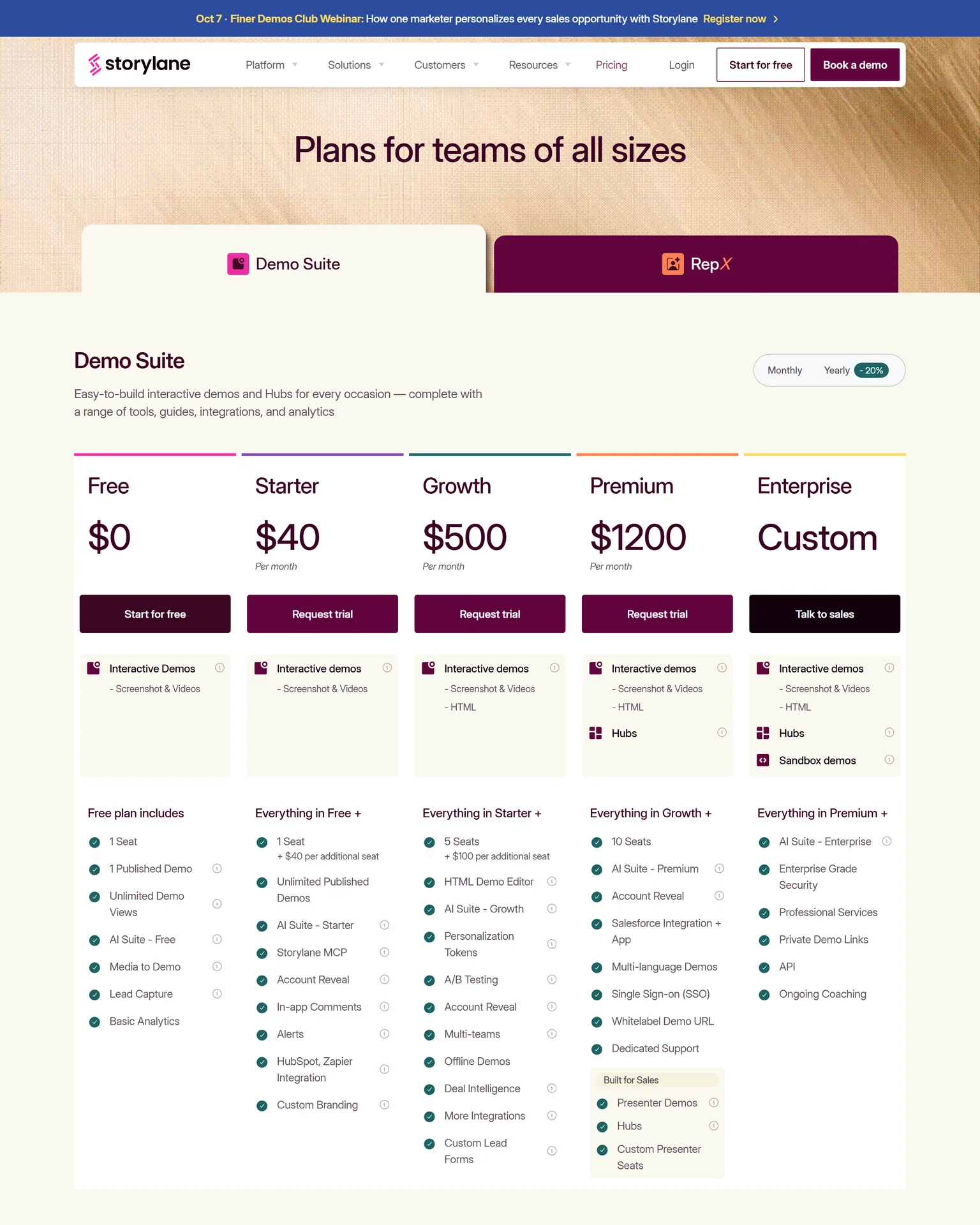
Storylane builds interactive demos and AI SDRs that convert buyers to pipeline. It has a free plan and a low Starter price. Teams look elsewhere when they grow, for four reasons that all sit on Storylane's own pricing page.
- HTML demos cost a big step up. Starter costs $40 a month with yearly billing, but the HTML demo editor starts on Growth at $500 a month with yearly billing. An HTML demo copies the page code, so text and data stay editable.
- Every seat is paid. Starter charges $40 per additional seat, and Growth charges $100 per additional seat. A growing team pays for each new builder.
- Sales tools and SSO wait for Premium. Premium costs $1200 a month with yearly billing and adds a Salesforce integration and single sign-on. Presenter demos also start on Premium.
- Sandbox demos need Enterprise. Enterprise adds sandbox demos, an API and enterprise grade security, and it is priced through sales.
How we picked and checked these Storylane alternatives
A tool qualified when it shows a SaaS product to buyers or users without a live call, as a clickable demo, a sandbox or a video. We started from the tools that appear most often across the top search results for Storylane alternatives and kept seven. Each one was judged on what it produces, how clear its pricing is, the caps on its cheapest plans, and the team it fits.
- Own screenshots. Every homepage and pricing screenshot on this page is ours, taken on September 30, 2026 at 1440 pixels wide.
- Verified facts. Every price, limit and plan detail comes from the vendor's own page, and a script re-checked each one on September 30, 2026. Arcade and Navattic draw some prices as graphics, so we read those from our screenshots.
- Dropped tools. Consensus and Demostack publish no pricing page to check. Karumi, PuppyDog, Omedym and Saleo appear on a single list each, usually their own. Guideflow is covered on our Arcade alternatives page.
- No affiliate links. No vendor on this page pays us for a mention or a click.
GuideClarity publishes this page and is listed first. We describe its weaknesses with the same directness as everyone else's, and the facts about it come from the same public pages.
1. GuideClarity: best for SaaS teams that want product demo videos, explainer videos, blog posts and other marketing assets generated automatically from their product features
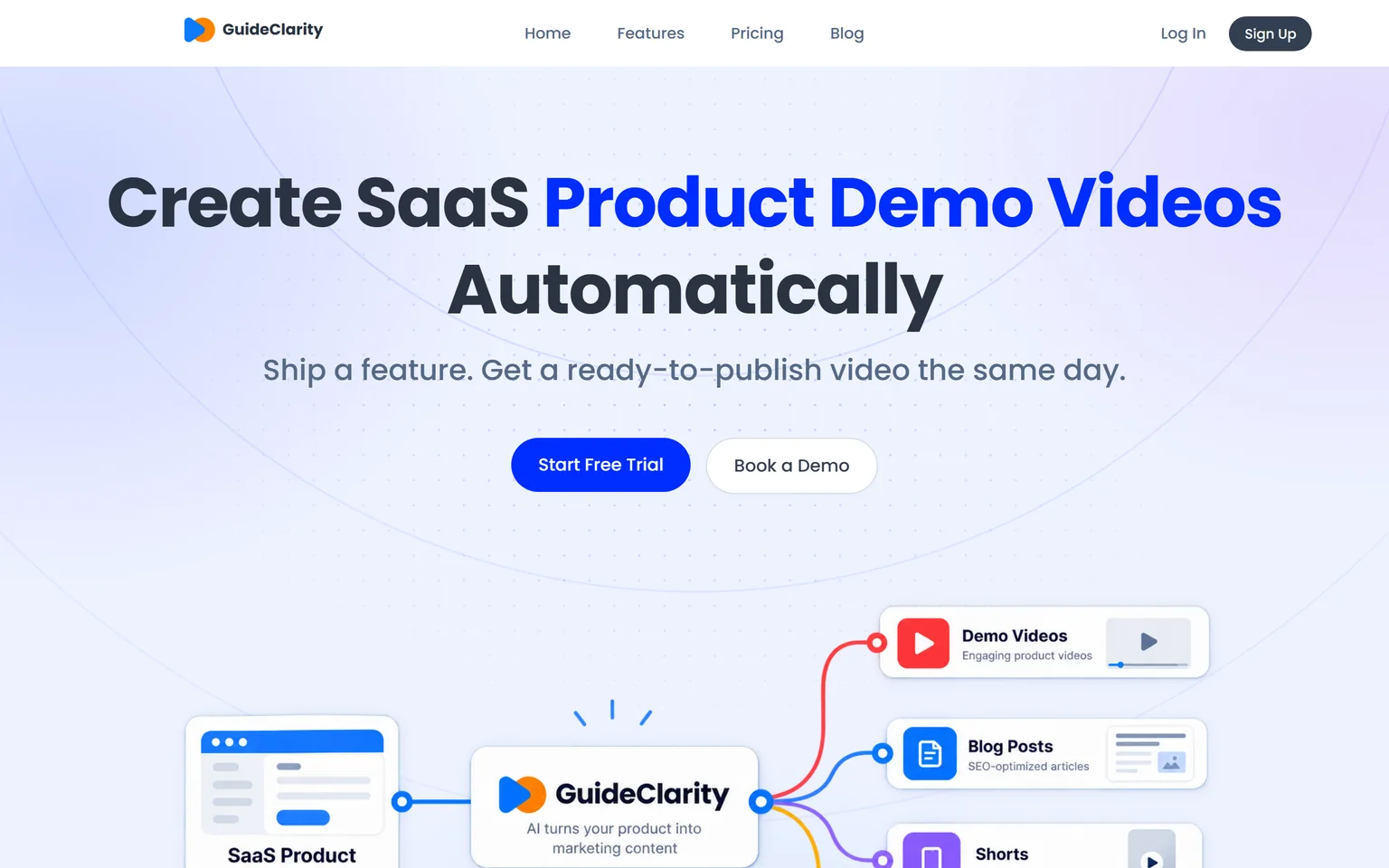
GuideClarity creates SaaS product demo videos automatically. It is best for SaaS teams that want to turn product features into marketing content automatically, without manually recording, scripting, editing and recreating the same content for every channel. It creates demo videos, feature explainers, shorts, blog posts, screenshots and launch assets. SaaS companies that ship features often get the most from it, from a single founder to a large marketing team.
What GuideClarity does
Storylane asks you to capture a flow and build the demo step by step. GuideClarity starts from your product. It generates the demo video and the explainer video automatically from your live product URL, so nobody records a screen. From the same feature it turns one release into a demo video, shorts, a blog post, social posts, screenshots and an announcement. Our guide on making a SaaS demo video that converts shows what a good one needs.
GuideClarity pricing
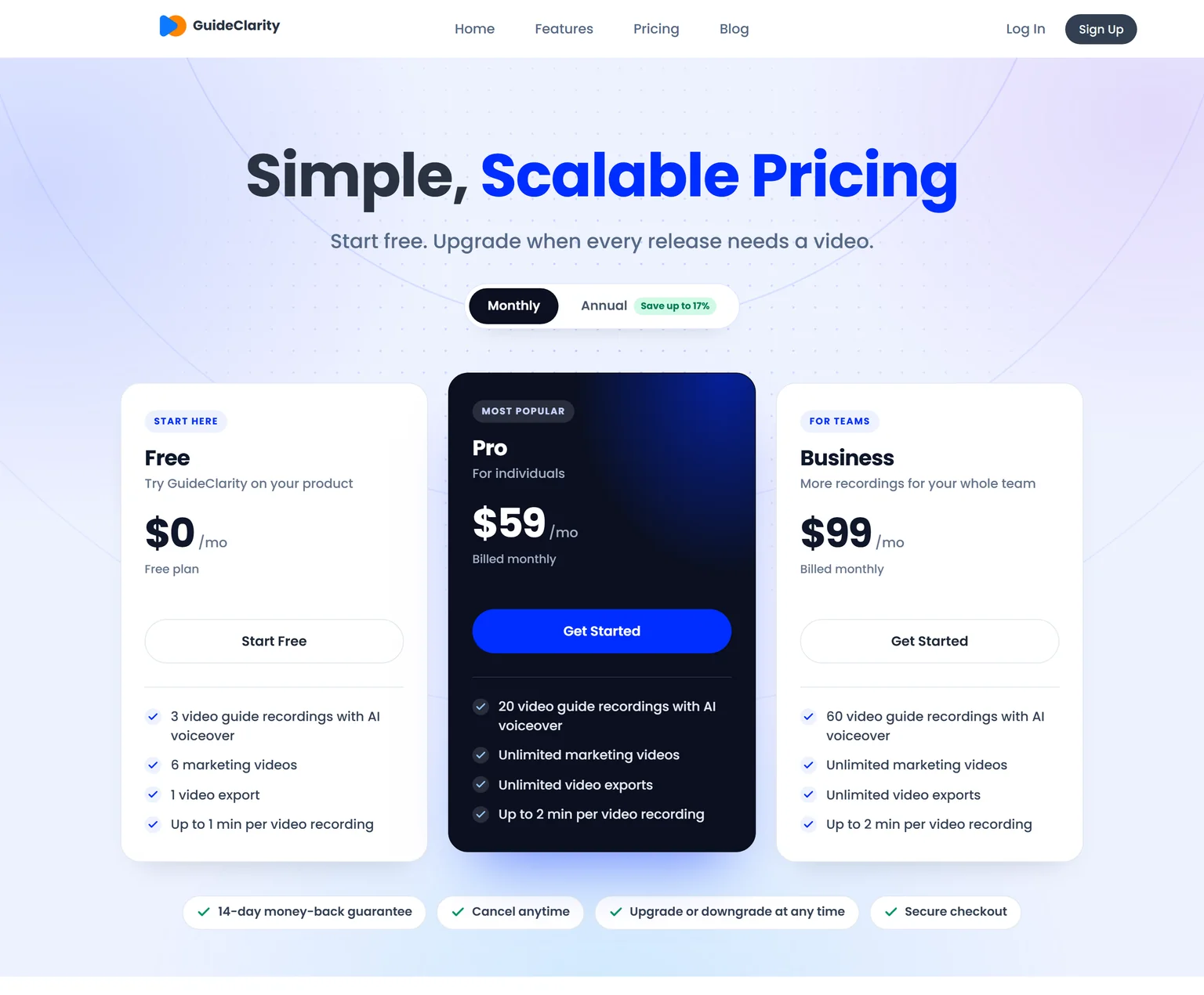
GuideClarity has three plans. The free plan includes 3 video guide recordings with AI voiceover and 6 marketing videos. Pro costs $59 a month billed monthly and includes 20 video guide recordings, or $49 a month billed yearly. Business costs $99 a month and includes 60 video guide recordings. Every paid plan carries a 14-day money-back guarantee.
Strengths
- No capture, no script and no editing. Review and publish is the work.
- One feature in, a whole launch kit out, with the videos, docs, shorts and blog post shaped for their channels.
- Plans are priced per workspace, not per seat, so a bigger team does not mean a bigger bill.
- Videos stay in step with what shipped.
- A free plan to test on a real feature before paying.
Weaknesses
- Built for SaaS product and feature content, not for physical products or other non-software businesses.
- Not a clickable demo builder. Teams whose main need is a hands-on tour with hotspots and forms are better served by a demo tool.
- Not for agencies that produce brand films or talking-head videos.
Who GuideClarity is for
GuideClarity fits founders, heads of marketing, marketing teams and product marketers at SaaS companies, from a single founder to a large marketing team. It is easy enough to start that small teams adopt it first, and it scales to large marketing teams. The GuideClarity features page lists every output.
GuideClarity vs Storylane
Storylane builds clickable demos from your captures, and its HTML demos start on a higher plan. GuideClarity generates the video automatically from your live product URL, and produces the documentation, shorts, blog post and the complete marketing package from the same feature. Storylane is the better pick when buyers should click through the product themselves. GuideClarity is the better pick when the goal is a product video and the launch content around it.
2. Supademo: best for HTML demos at a lower price than Storylane Growth
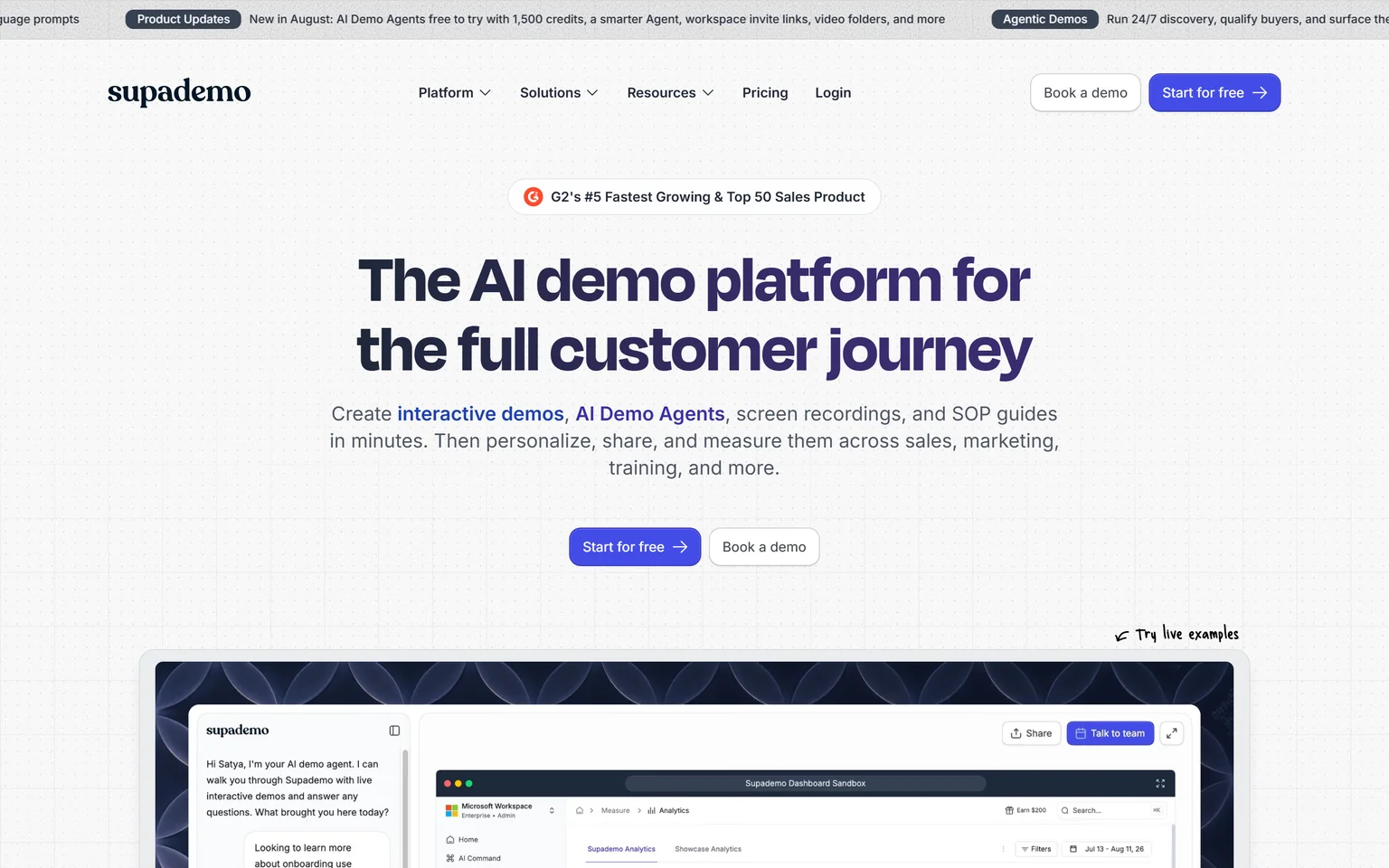
Supademo is the closest like-for-like Storylane alternative. It builds interactive demos and AI demo agents, and it sells HTML demos on a plan that costs less than Storylane Growth. Marketing, sales and customer success teams that want clickable demos without a big jump in price get the most from it. We compare its own rivals on the Supademo alternatives page.
What Supademo does
Supademo captures your screens and turns them into a guided demo with hotspots and text. It captures through a Chrome extension, a Figma plugin and desktop apps for Mac and Windows. It shares demos as a link, an embed, a video or a PDF. The Scale plan adds branching and variables, tracking links and analytics.
Supademo pricing
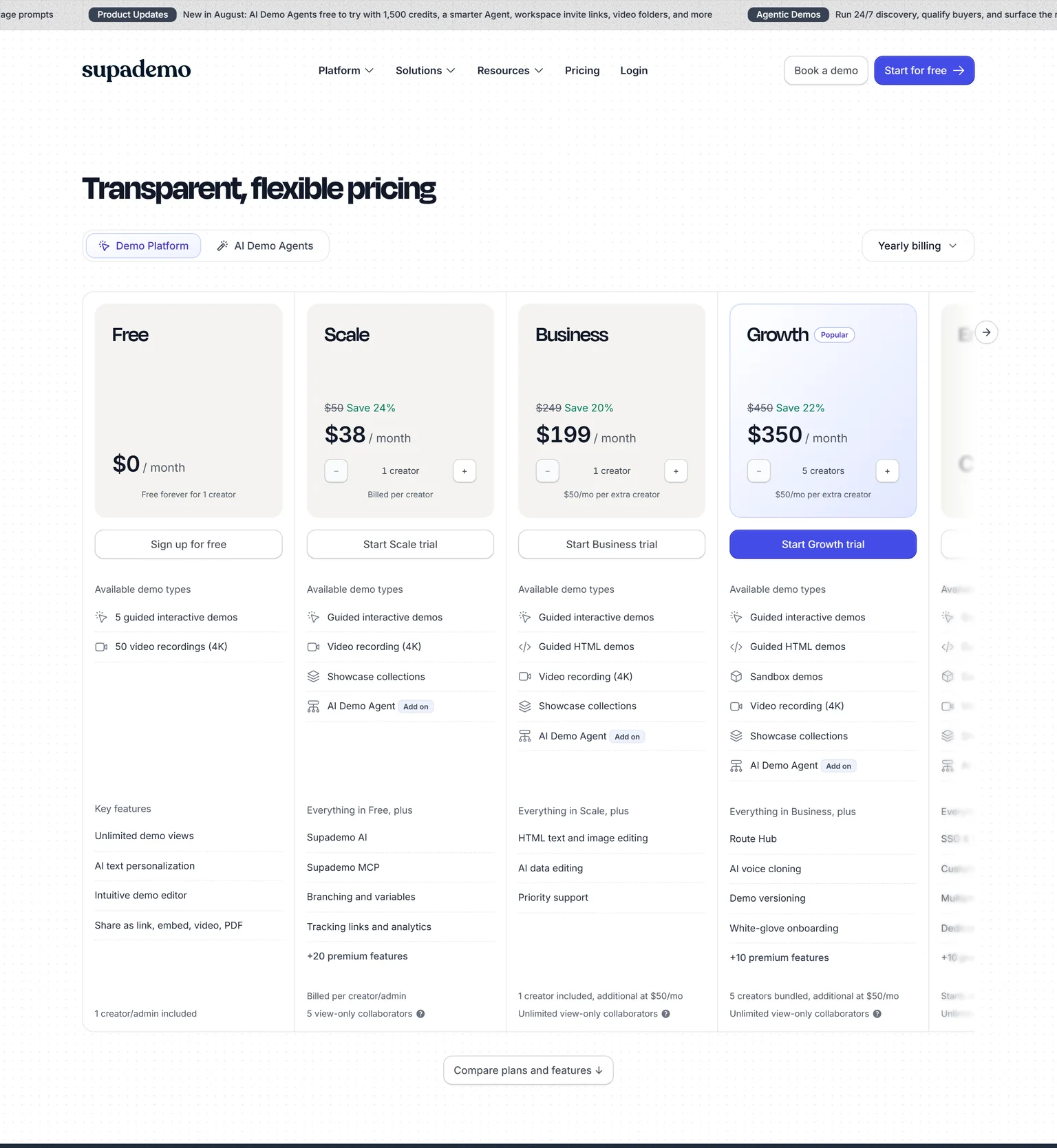
The Free plan is free forever for 1 creator with 5 guided interactive demos and 50 video recordings. Scale costs $38 per creator a month billed yearly, or $50 monthly. Business costs $199 a month billed yearly for 1 creator and adds guided HTML demos. Growth costs $350 a month billed yearly with 5 creators bundled and adds sandbox demos.
Strengths
- A larger free plan than Storylane's.
- HTML demos from a lower price than Storylane Growth.
- Sandbox demos on a listed plan.
- Demos export as video and PDF as well as embeds.
Weaknesses
- Priced per creator on Scale.
- No AI SDR like Storylane's RepX.
- SSO waits for the custom priced Enterprise plan.
Who Supademo is for
Supademo fits teams of one to five creators who want Storylane's kind of demo and HTML demos without paying for Growth. Teams that need a finished product video should look at GuideClarity. See our Storylane vs Supademo comparison for the full head to head.
Supademo vs Storylane
Supademo Business adds guided HTML demos for $199 a month billed yearly. Storylane puts the HTML demo editor on Growth at $500 a month. Supademo Growth adds sandbox demos at $350 a month billed yearly, while Storylane keeps sandbox demos on Enterprise. Storylane wins on sales tools such as Hubs and RepX. Supademo wins on price.
3. Arcade: best for screenshot demos plus AI product videos
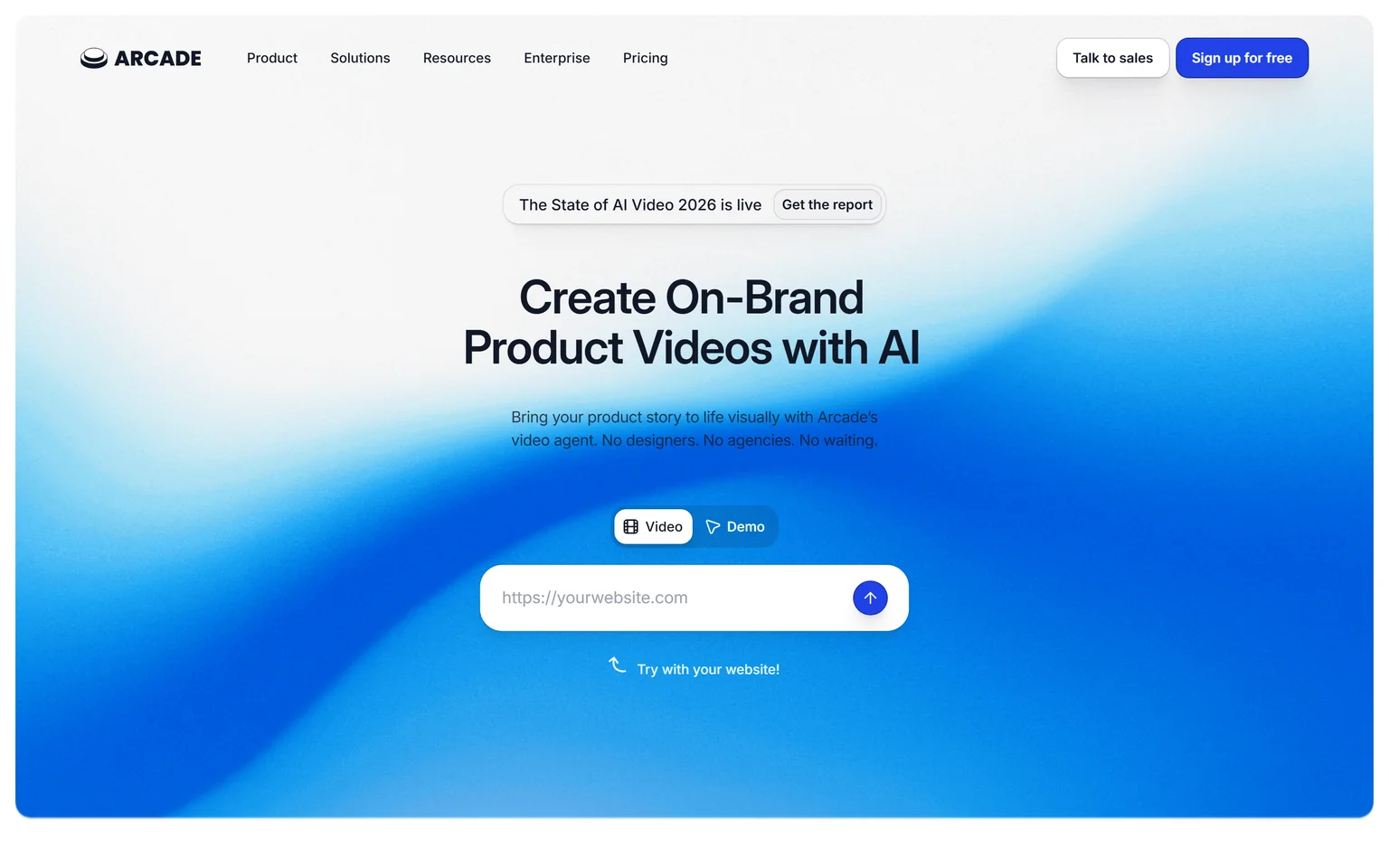
Arcade builds clickable demos, and it now leads with AI video. It creates on-brand product videos with AI through a video agent. Product marketers who want polished screenshot demos and short product videos from one tool get the most from it. Teams that need HTML demos will find them only on Arcade's Enterprise plan. We compare its rivals on the Arcade alternatives page.
What Arcade does
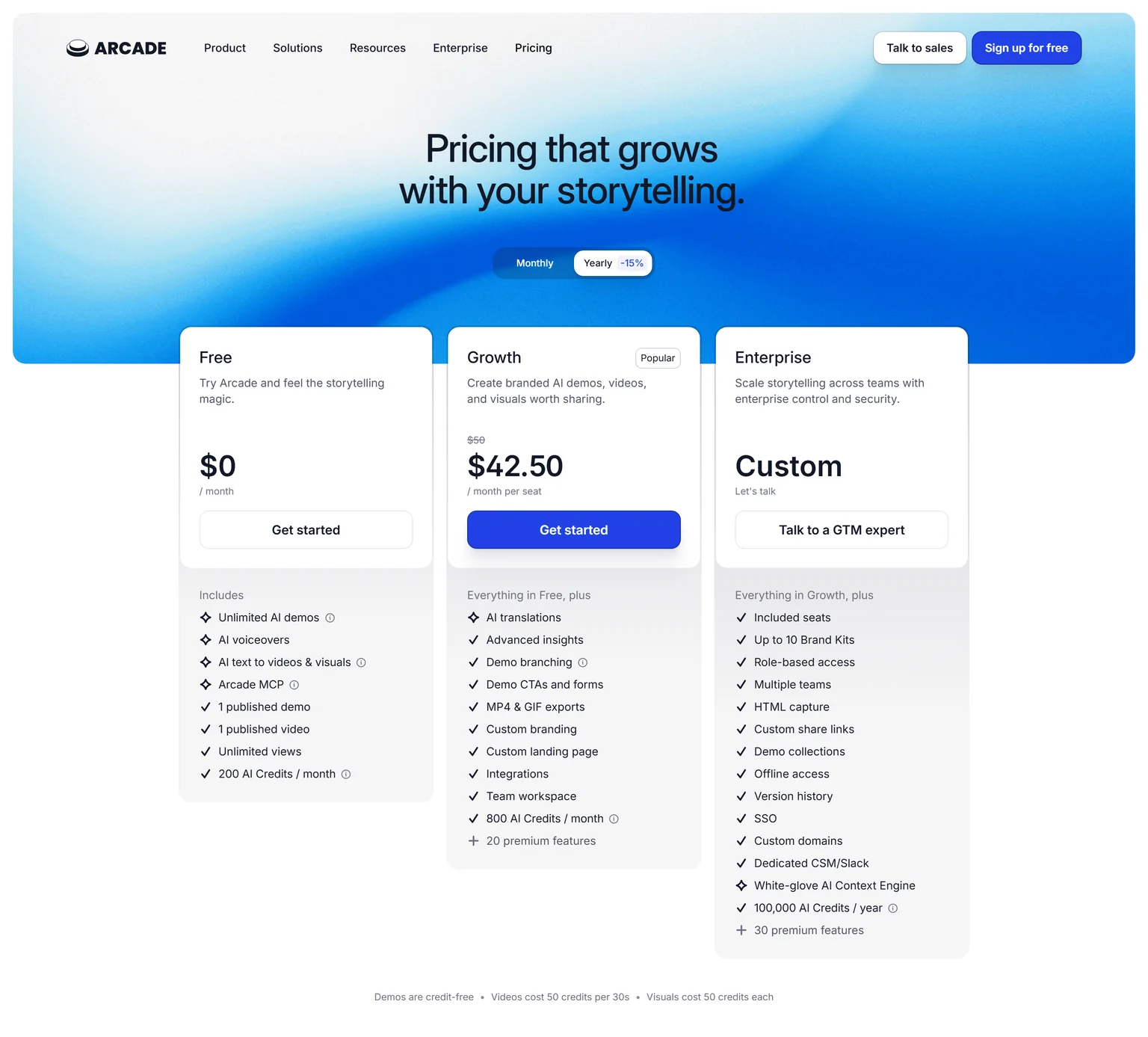
Arcade records through a Chrome extension, a desktop app for Mac and Windows, and a Figma plugin. Its Free plan includes unlimited AI demos, AI voiceovers and AI text to videos and visuals. Growth adds MP4 and GIF exports, custom branding and a team workspace.
Arcade pricing
The Free plan costs $0 a month and includes 1 published demo, 1 published video and 200 AI credits a month. Growth is listed at $50 a month per seat, with 15 percent off on yearly billing, which the page shows as $42.50 a month per seat. AI videos cost 50 credits per 30 seconds, and Growth includes 800 AI credits a month.
Strengths
- AI product videos next to clickable demos.
- AI voiceovers and visuals on the free plan.
- MP4 and GIF exports on Growth.
Weaknesses
- HTML capture only on custom priced Enterprise.
- Every user is a paid seat.
- AI video runs on a credit meter.
Who Arcade is for
Arcade fits a product marketer or a small team that wants screenshot demos and quick AI videos for launches. Teams that need HTML demos at a listed price should compare Supademo, HowdyGo and Navattic. Our Storylane vs Arcade comparison goes criterion by criterion.
Arcade vs Storylane
Arcade Growth costs $42.50 a month per seat on yearly billing, against Storylane Starter at $40 a month with yearly billing. Storylane adds the HTML demo editor on Growth, while Arcade keeps HTML capture on custom priced Enterprise. Pick Arcade for AI video. Pick Storylane for HTML demos at a listed price.
4. HowdyGo: best for unlimited users and HTML demos on one plan
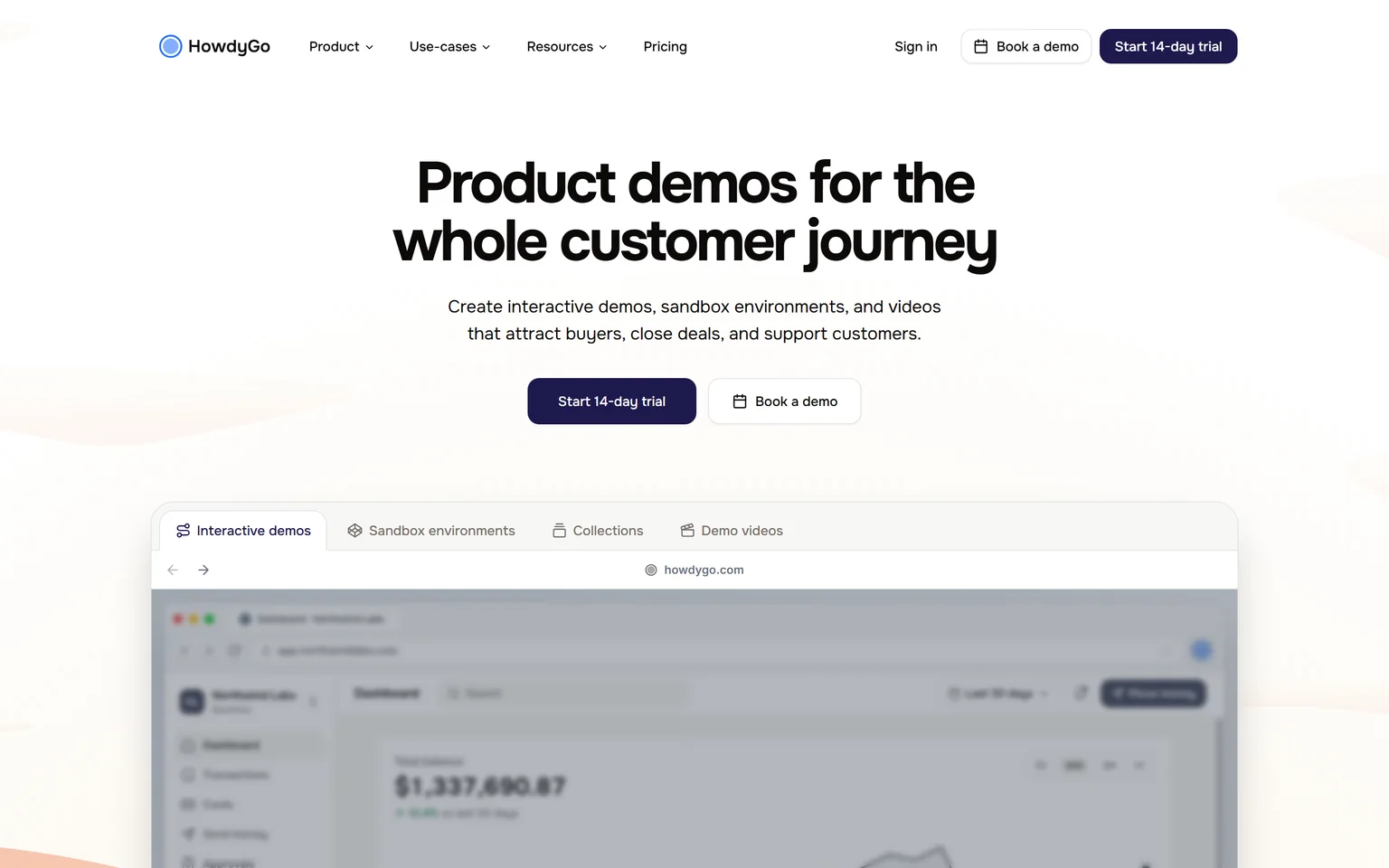
HowdyGo creates interactive demos, sandbox environments and videos, and it does not charge per seat. Its Starter plan includes unlimited users and unlimited HTML demos at one monthly price. Marketing and sales teams where many people build demos get the most from it. Solo users who want a free plan should look at Supademo or Arcade instead.
What HowdyGo does
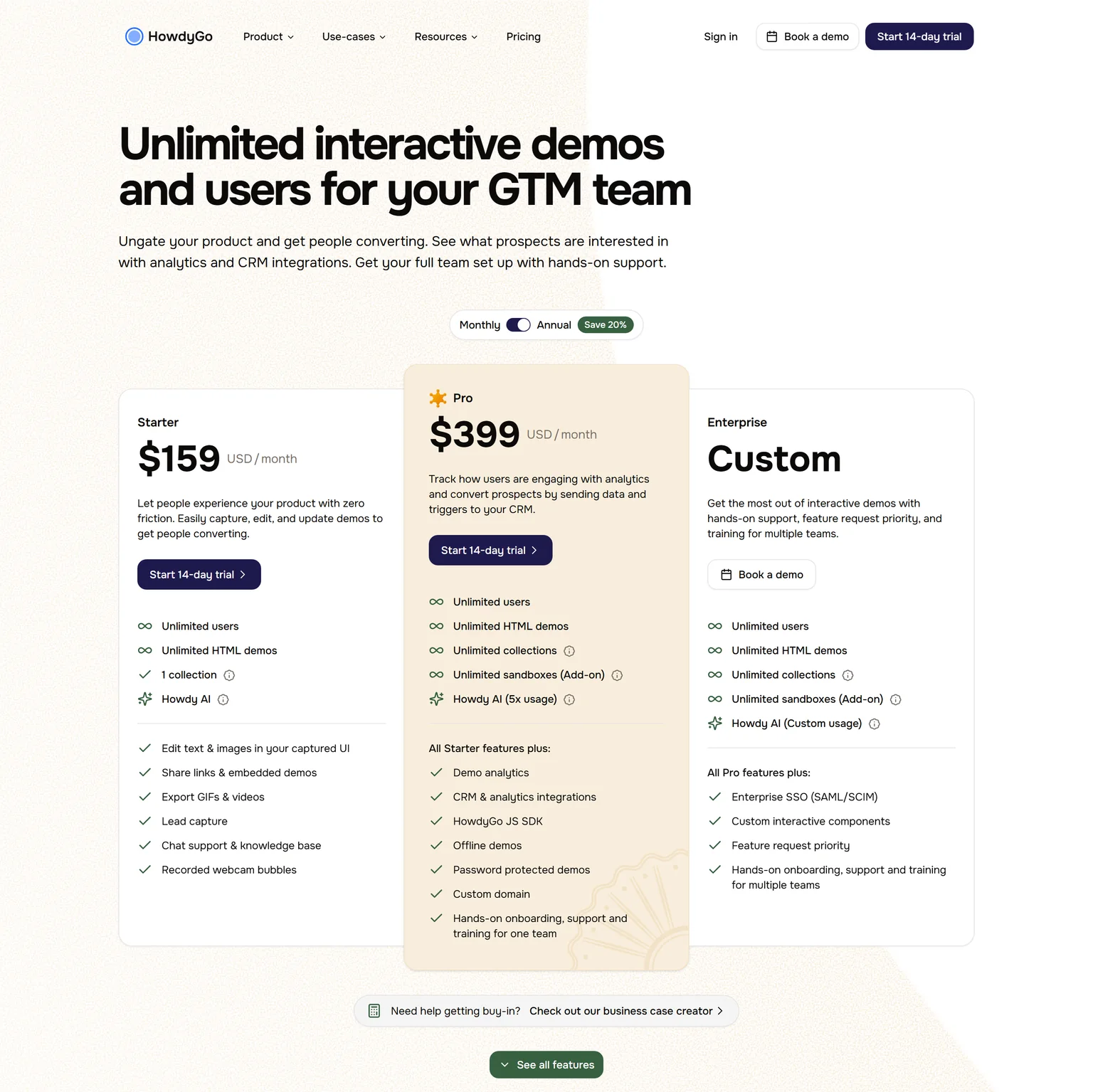
HowdyGo captures your product as HTML, so you can edit text and images after capture. Starter includes unlimited users, unlimited HTML demos, 1 collection and GIF and video export. Pro adds demo analytics and CRM integrations.
HowdyGo pricing
Starter costs $159 a month with annual billing, or $199 a month with monthly billing. Pro costs $399 a month with annual billing. Enterprise is custom priced and adds SSO with SAML and SCIM. HowdyGo offers a 14-day trial in place of a free plan.
Strengths
- Unlimited users on every plan.
- Unlimited HTML demos on the entry plan.
- GIF and video export included.
Weaknesses
- No free plan, only a trial.
- Analytics and CRM links wait for Pro.
- A higher entry price than Storylane Starter for one user.
Who HowdyGo is for
HowdyGo fits teams of three or more that want HTML demos and do not want to count seats. One person on a budget will pay less on Storylane Starter or Supademo Scale.
HowdyGo vs Storylane
HowdyGo Starter includes unlimited users and unlimited HTML demos for $159 a month with annual billing. Storylane Growth includes 5 seats and the HTML demo editor for $500 a month, and each extra seat costs $100. Storylane wins on sales tools. HowdyGo wins for larger teams that need HTML demos.
5. Navattic: best for HTML demos on marketing sites
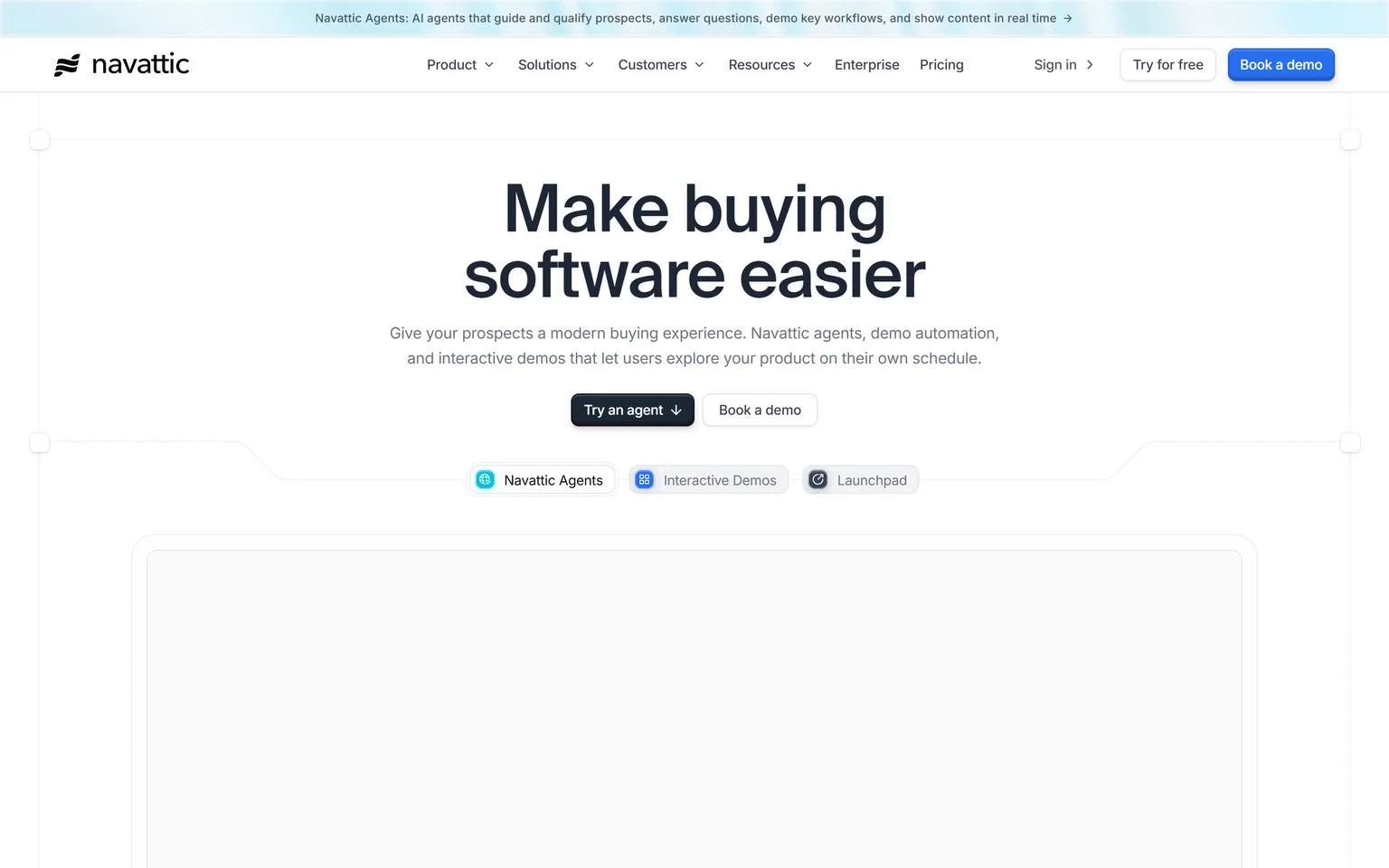
Navattic offers AI agents, demo automation and interactive demos, and it builds HTML demos from its first paid plan. Marketing teams that run website tours and product launches get the most from it. Its list price matches Storylane Growth, so the choice comes down to features and seats. Small teams should ask about its startup plan.
What Navattic does
Navattic captures your product as HTML and builds a guided tour on top. Its agents can answer buyer questions inside a demo. Base is billed annually and includes 5 seats and unlimited HTML demos. Base also includes integrations with Salesforce, Marketo and 25+ more, plus A/B testing.
Navattic pricing
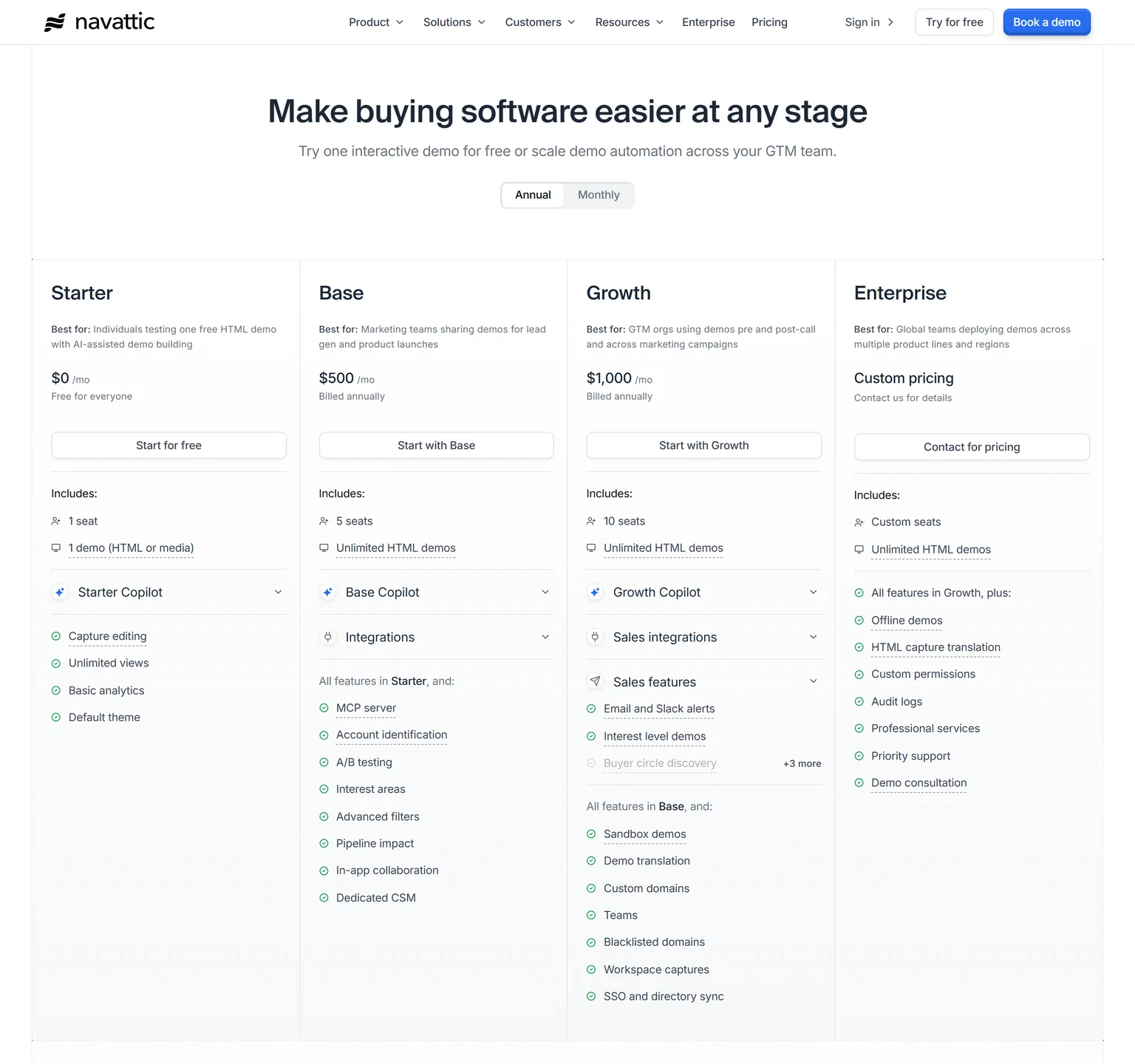
The Starter plan is free for everyone with 1 seat and 1 demo, HTML or media. The page shows prices as graphics, so we read them from our screenshot. Base shows $500 a month billed annually, and Growth shows $1,000 a month billed annually. Growth includes 10 seats and adds sandbox demos, demo translation and SSO.
Strengths
- HTML demos from the first paid plan.
- The free demo can be HTML.
- Salesforce and Marketo on the entry plan.
Weaknesses
- A high entry price for one or two users.
- Sandbox demos and SSO wait for Growth.
- No AI video generation like Arcade's video agent.
Who Navattic is for
Navattic fits a marketing team of five or more that wants HTML tours on its website and in ads. Seed-stage teams of 30 or fewer can ask for a startup plan. Our Storylane vs Navattic comparison covers the two head to head.
Navattic vs Storylane
Both charge about the same for HTML demos. Navattic Base shows $500 a month billed annually, and Storylane Growth costs $500 a month with yearly billing. Navattic puts Salesforce on Base, while Storylane adds its Salesforce integration on Premium. Storylane wins with a cheap Starter plan. Navattic wins for marketing teams that live in Salesforce and Marketo.
6. Walnut: best for sales teams that personalize demos per deal
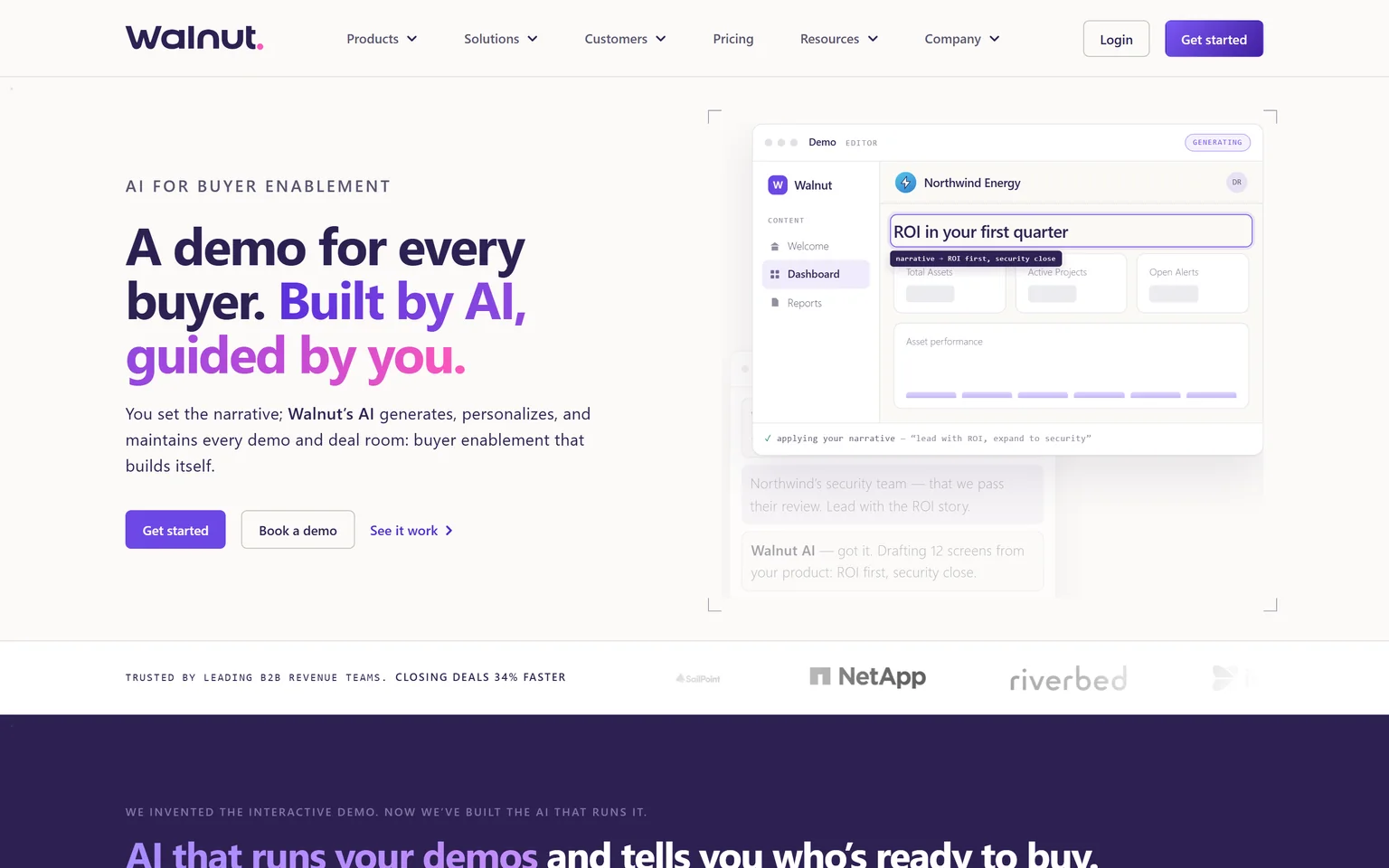
Walnut says its AI generates, personalizes and maintains every demo and deal room. It is built for sales teams that tailor a demo to each account, and it adds deal rooms and an AI buyer agent. Revenue and presales teams with a budget get the most from it. It has no free plan, so small marketing teams should look higher on this list.
What Walnut does
Walnut's AI builds the interactive demo from a described story, and when your product changes, your demos update themselves. It builds a live deal room for every buyer from your CRM. Every plan includes a pool of AI credits for this work.
Walnut pricing
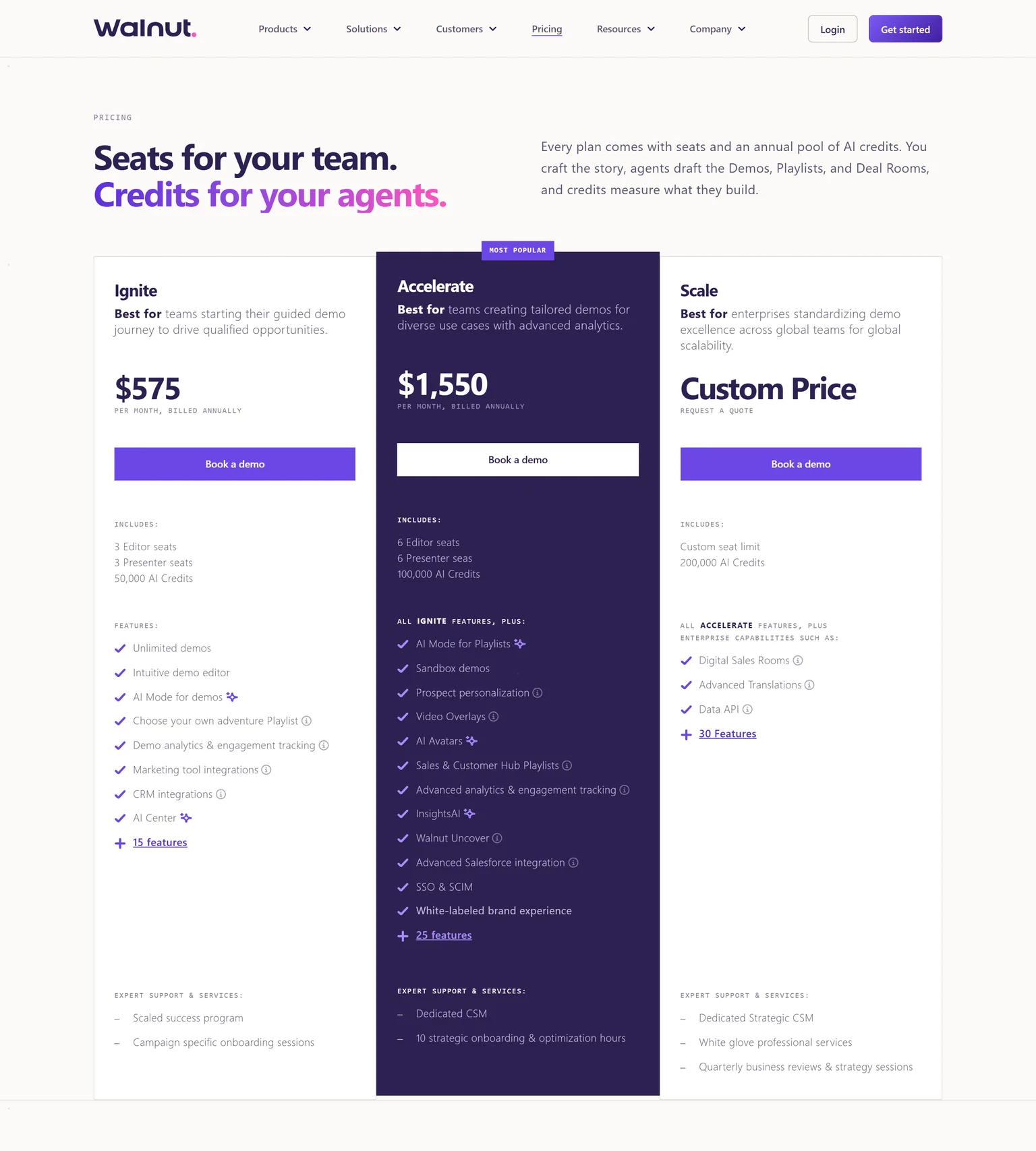
Ignite costs $575 a month billed annually and includes 3 editor seats, 3 presenter seats and 50,000 AI credits. Accelerate costs $1,550 a month billed annually and includes 6 editor seats. Scale has a custom price. Plans are bought through Book a demo.
Strengths
- Demos personalized per account by AI.
- Deal rooms built from the CRM.
- Three editor and three presenter seats on the entry plan.
Weaknesses
- No free plan.
- Bought through a sales call.
- Priced for revenue teams, not for one marketer.
Who Walnut is for
Walnut fits B2B sales and presales teams that run many live deals and want a tailored demo for each one. Marketing teams that need a demo on the website can do that for less with Supademo, Arcade or Storylane itself. Our Storylane vs Walnut comparison goes deeper.
Walnut vs Storylane
Storylane is self-serve, with a free plan and trials on request. Walnut starts at $575 a month billed annually and sells through a demo call. Walnut adds sandbox demos and prospect personalization on Accelerate, while Storylane keeps sandbox demos on Enterprise. Pick Walnut when each deal needs its own demo.
7. Reprise: best for enterprise sandbox demos cloned from the live app
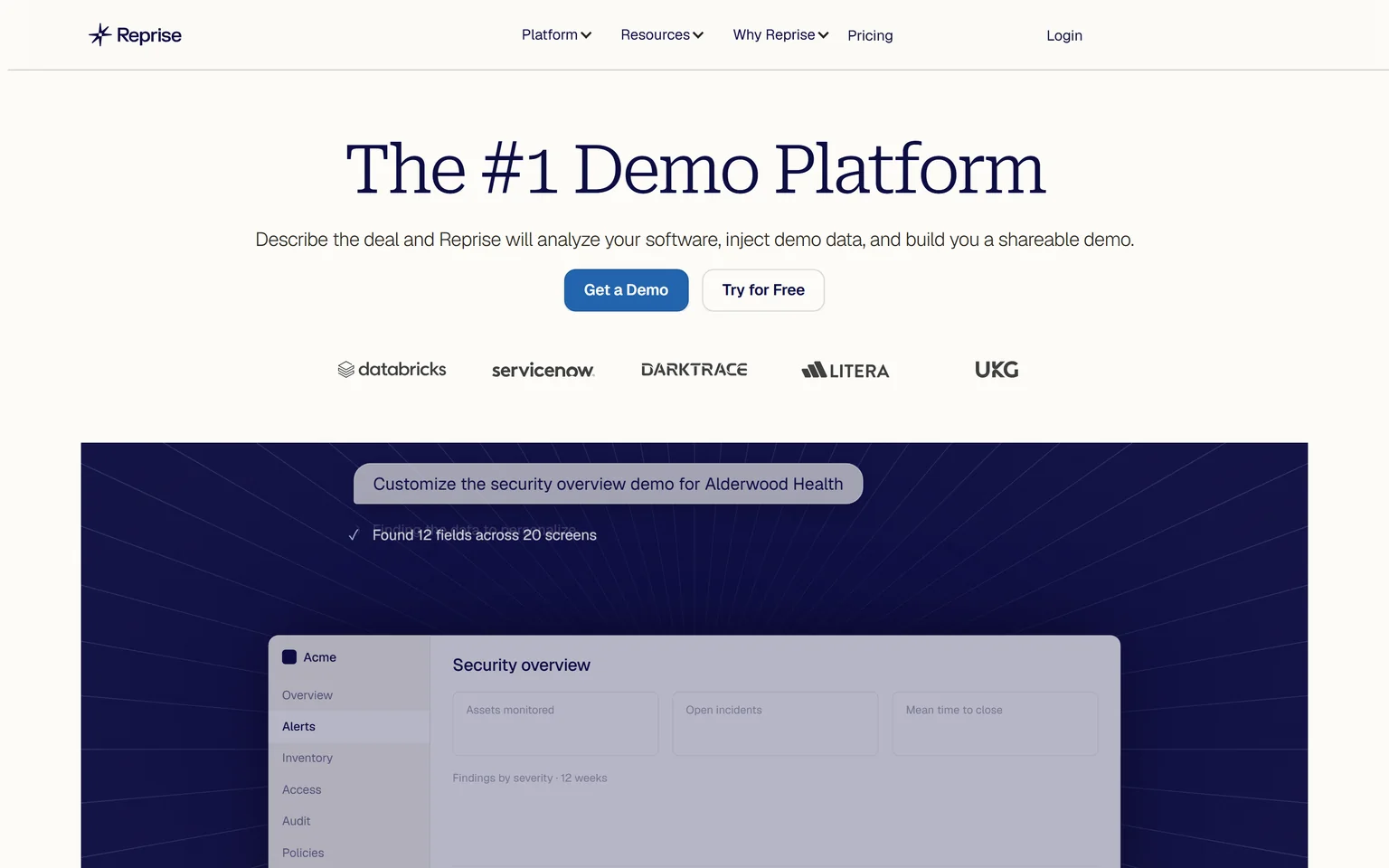
Reprise analyzes your software, injects demo data and builds a shareable demo from a described deal. It clones whole applications into sandboxes that buyers can click freely. Enterprise solutions engineering teams with complex products get the most from it. It publishes no prices, so smaller teams should expect a sales process and an annual contract.
What Reprise does
Reprise includes full application cloning with realistic sandbox environments and unlimited guided demos. Unlimited AI data injection fills demos with data. It offers 100+ demo-authoring tools over MCP and an AI Tour Guide that answers questions. An avatar can present the demo out loud.
Reprise pricing
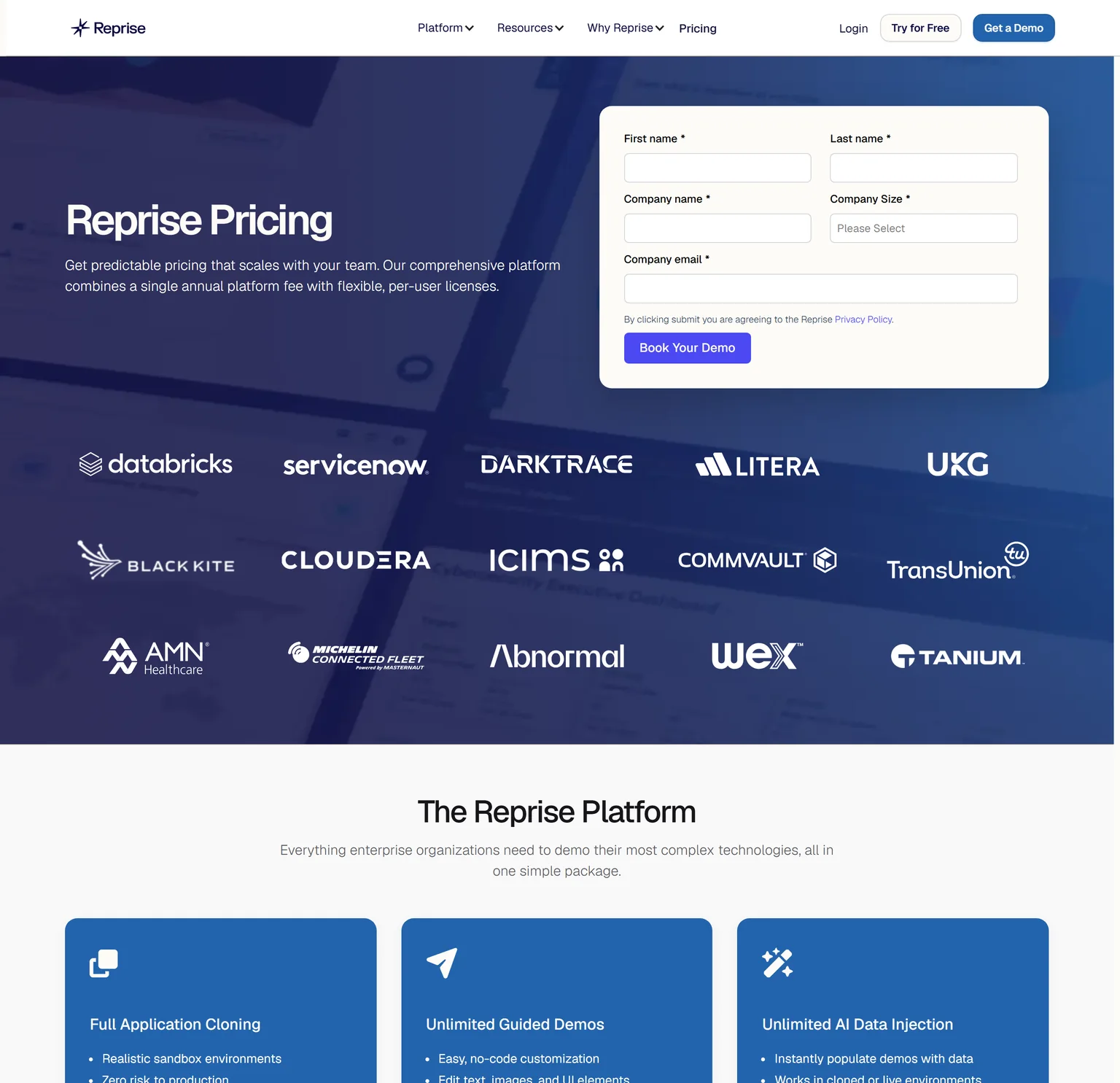
Reprise does not list prices. It combines a single annual platform fee with per-user licenses, and pricing is on request. It is SOC 2 Type II and ISO 27001 certified, with SSO and role-based access in every package.
Strengths
- Full application clones as sandbox demos.
- AI data injection for realistic demo data.
- SSO and role-based access in every package.
Weaknesses
- No public prices.
- Built for enterprise teams, not for one marketer.
- No free plan to test on your own.
Who Reprise is for
Reprise fits enterprise presales teams that demo complex software and need safe, resettable sandboxes. It connects to Marketo, HubSpot, Salesforce and Google Analytics. A startup that needs a website tour will get there faster with Storylane or Supademo.
Reprise vs Storylane
Storylane lists its prices and puts sandbox demos on Enterprise. Reprise sells sandbox demos as its core, with full application cloning in every package. Storylane is the better pick for self-serve demos on a website. Reprise is the better pick when the buyer must use the real product safely.
Which Storylane alternative should you choose
Pick by the output you need and the team that will use it. If it is a product demo video or explainer video and the launch content around it, GuideClarity generates all of it from your product. If it is a clickable demo, the right pick depends on HTML demos, seats and whether sales runs the process.
- If you ship features often and want the demo video, explainer video, shorts and blog post the same day, pick GuideClarity.
- If you want HTML demos without paying for Storylane Growth, pick Supademo.
- If you want AI product videos next to your demos, pick Arcade.
- If many people build demos and you hate seat pricing, pick HowdyGo.
- If your marketing team runs on Salesforce and Marketo, pick Navattic.
- If every sales deal needs its own tailored demo, pick Walnut.
- If buyers must click through a safe copy of your real product, pick Reprise.
- If you want a cheap start with a path to Hubs and an AI SDR, stay with Storylane. Its Starter plan and sales tools still work well together.
Frequently asked questions about Storylane alternatives
Is there a free Storylane alternative?
Several tools are free to start. Supademo's Free plan is free forever for 1 creator with 5 guided interactive demos. Arcade's Free plan includes 1 published demo and 1 published video. Navattic's Starter plan is free with 1 demo, HTML or media. GuideClarity's free plan includes 3 video guide recordings with AI voiceover and 6 marketing videos.
How much does Storylane cost?
The Free plan costs $0 with 1 seat and 1 published demo. Starter costs $40 a month with yearly billing, or $50 a month with monthly billing. Growth costs $500 a month with yearly billing, and Premium costs $1200 a month with yearly billing. Enterprise is priced through sales.
Is Arcade better than Storylane?
It depends on the output. Arcade creates product videos with AI through a video agent, which Storylane does not. Storylane adds the HTML demo editor on Growth, while Arcade keeps HTML capture on Enterprise. Pick Arcade for AI video and Storylane for HTML demos at a listed price.
Is Walnut better than Storylane for sales teams?
For teams that tailor a demo to every deal, often yes. Walnut's AI generates, personalizes and maintains every demo and deal room. It costs more, starting at $575 a month billed annually. Storylane is cheaper to start and adds Hubs, a digital sales room your champion can forward.
Which Storylane alternative has the cheapest HTML demos?
HowdyGo includes unlimited HTML demos and unlimited users on Starter at $159 a month with annual billing. Supademo adds guided HTML demos on Business at $199 a month billed yearly. Navattic's free demo can be HTML. Storylane starts HTML demos on Growth at $500 a month.
Which Storylane alternative makes product videos?
GuideClarity generates product demo videos and explainer videos from your live product URL, with the docs, shorts, blog post and social posts from the same feature. Arcade makes AI product videos from its video agent. Supademo and HowdyGo export a demo as video. Our guide to AI explainer videos for SaaS compares the formats.
How did you verify the prices on this page?
We opened each vendor's pricing page in a browser on September 30, 2026 and saved its text. A script then checked every quoted price and limit against that saved page. Arcade and Navattic draw some prices as graphics, so we read those from our own screenshots. Our SaaS demo software buyers guide explains the categories.
Sources and verification
Every fact above was read on the pages below on September 30, 2026. The vendor's own page wins over any third-party listing when they disagree. Prices change, so check the vendor before you buy.
- Storylane pricing page, checked September 30, 2026.
- Storylane homepage, checked September 30, 2026.
- GuideClarity pricing page, checked September 30, 2026.
- GuideClarity homepage, checked September 30, 2026.
- Supademo pricing page, checked September 30, 2026.
- Supademo homepage, checked September 30, 2026.
- Arcade pricing page, checked September 30, 2026.
- Arcade homepage, checked September 30, 2026.
- HowdyGo pricing page, checked September 30, 2026.
- HowdyGo homepage, checked September 30, 2026.
- Navattic pricing page, checked September 30, 2026.
- Navattic homepage, checked September 30, 2026.
- Walnut pricing page, checked September 30, 2026.
- Walnut homepage, checked September 30, 2026.
- Reprise pricing page, checked September 30, 2026.
- Reprise homepage, checked September 30, 2026.
Leaving Storylane because you want a finished product video rather than another demo to build? GuideClarity generates the demo video, the explainer video, the shorts, the blog post and the social posts from your live product, with nothing to record and no per-seat pricing.
The free plan includes 3 video guide recordings with AI voiceover, so you can run a real feature through it before paying.